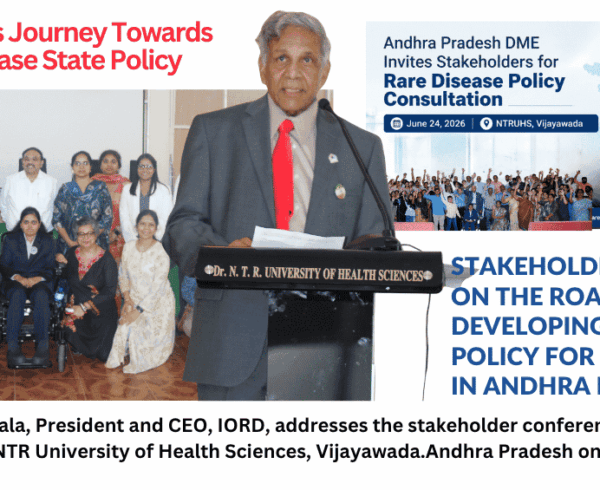
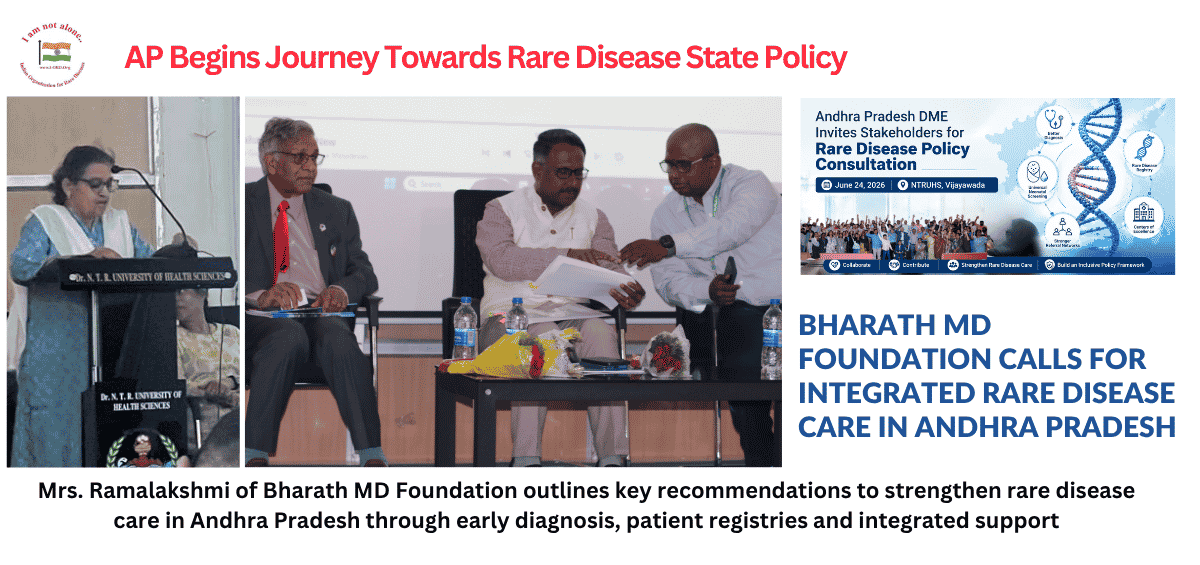
Vijayawada: Andhra Pradesh has the opportunity to create a comprehensive and patient-centric rare disease care ecosystem by prioritising early diagnosis, strengthening referral networks, developing digital patient registries, and providing coordinated family support, according to Mrs. B.V. Ramalakshmi of Bharath MD Foundation. Delivering a presentation during a stakeholder meeting organised by the Government of Andhra Pradesh, she outlined a roadmap aimed at improving diagnosis, treatment access and long-term care for individuals living with rare diseases across the state.
She emphasised that rare disease patients often spend years searching for an accurate diagnosis, during which irreversible complications affecting the lungs, heart, muscles and other organs may develop. Identifying patients at the earliest stage, she noted, can significantly improve quality of life and treatment outcomes while reducing the burden on families and the healthcare system.
Early Identification Must Begin in the Community
Mrs. Ramalakshmi highlighted the importance of empowering frontline healthcare workers to recognise the early warning signs of rare diseases. She recommended training ASHA workers, primary healthcare staff and community health professionals to identify red flag symptoms and establish clear referral pathways linking villages with Primary Health Centres (PHCs), district hospitals and medical colleges. Such a structured referral network would help ensure timely diagnosis before complications become irreversible.
Building Clinical Capacity Across India
Drawing on the experience of Bharath MD Foundation, she shared that the organisation has conducted several training camps across the country to improve awareness and clinical preparedness for rare diseases. The Foundation’s first training programme was held in Jaipur and has since expanded to other states, helping healthcare professionals recognise and manage rare disease cases more effectively.
Patient Registries Can Transform Care and Research
A major focus of the presentation was the importance of maintaining a comprehensive patient registry. Mrs. Ramalakshmi explained that the Foundation has developed a database that captures both common patient information—including demographics, family details, communication preferences and digital accessibility—as well as disease-specific information such as clinical diagnosis, genetic testing reports, family history, functional status, caregiver experiences and other relevant clinical details.
Such registries not only help estimate the true burden of rare diseases but also identify eligible patients for clinical trials and emerging therapies, including gene therapy. They also provide valuable evidence to support research, healthcare planning and policy formulation.
Beyond Treatment: Supporting Families Throughout Their Journey
Recognising that rare diseases affect entire families, Mrs. Ramalakshmi described the Foundation’s patient support initiatives, which include physician consultations, counselling, guidance on government welfare schemes, patient engagement activities, financial assistance wherever feasible, and connecting families with appropriate medical specialists. She stressed that emotional, informational and social support remain as important as medical care for families navigating lifelong rare conditions.
Collaboration Is Essential for Sustainable Care
Mrs. Ramalakshmi noted that effective rare disease care cannot be delivered by a single institution alone. Bharath MD Foundation works in partnership with Central and State Governments, medical institutions, public and private hospitals, pharmaceutical companies, academic organisations, international rare disease organisations, and rare disease umbrella organisations including IORD and other national organisations. Such collaborative efforts, she said, are vital for building sustainable care pathways and accelerating research.
Recommendations for Andhra Pradesh
Presenting a roadmap for the State Government, Mrs. Ramalakshmi proposed several measures that could significantly strengthen rare disease care in Andhra Pradesh.
One of the key recommendations was the creation of a patient navigation system, enabling families to access diagnosis, treatment and support through a single coordinated point of contact rather than navigating multiple departments independently.
She also advocated establishing Family Support Centres to provide guidance on available healthcare services, treatment pathways, government benefits, financial assistance and rehabilitation support.
To improve access to specialist care, she recommended developing multidisciplinary rare disease clinics, allowing patients to consult multiple specialists during a single hospital visit instead of travelling between different healthcare facilities.
Mrs. Ramalakshmi further proposed introducing digital patient registration and data management systems to strengthen patient tracking, follow-up services, research initiatives and evidence-based policy planning across the state.
Strengthening Referral Networks Across the State
An integrated referral mechanism linking hospitals across Andhra Pradesh was identified as another priority. Such a system would enable patients to be referred efficiently to appropriate specialists and tertiary care centres, reducing unnecessary delays in diagnosis and treatment.
Prioritising Maternal and Child Screening
Mrs. Ramalakshmi emphasised that maternal health screening and early childhood developmental assessments should become integral components of rare disease detection. Identifying suspected cases during infancy and ensuring prompt referral for confirmatory diagnosis can substantially improve long-term outcomes for affected children.
Raising Public Awareness
Limited public awareness continues to delay diagnosis and access to care. To address this, the Foundation recommended expanding community awareness programmes, strengthening healthcare worker training, providing family counselling and increasing awareness among policymakers to ensure rare diseases receive sustained attention within the public health system.