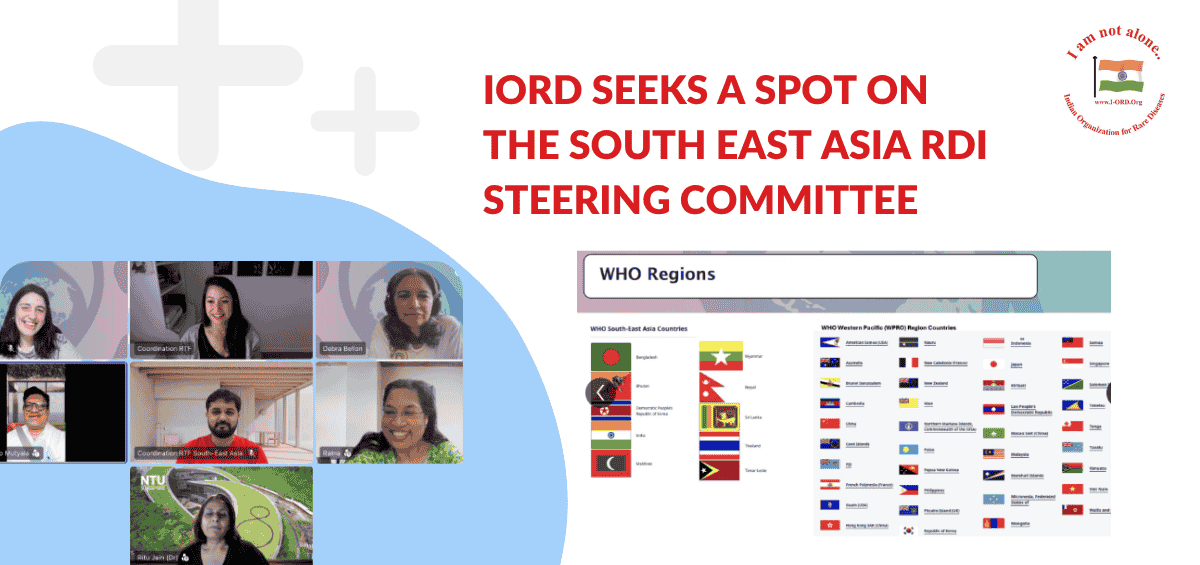
Hyderabad: The Indian Organization for Rare Diseases (IORD) has expressed interest in joining the South East Asia Rare Disease Initiative (SEARDI) Task Force Steering Committee, saying it wants to help shape regional priorities for rare disease care, advocacy and policy across South East Asia. The move comes as two regional task forces – Western Pacific and Southeast Asia regions – are being set up under Rare Diseases International’s (RDI) broader effort to strengthen rare disease advocacy and align with the WHO Global Action Plan on Rare Diseases.
What IORD is proposing
In its expression of interest, the non-profit rare disease advocacy IORD underscored its prominent role as a patient advocacy organization in India that has worked on patient support, awareness generation, policy advocacy and multi-stakeholder collaboration. It emphasised that its participation would bring India’s perspective on rare disease policy, clinical challenges and best practices into regional discussions.
IORD said it would focus on collaborative leadership, patient-centric advocacy, knowledge sharing, capacity building, stakeholder engagement, and ethical and transparent practices if selected for the steering committee.
“Rare disease families in South East Asia need a stronger, united voice, and IORD is committed to working with regional partners to make early diagnosis, equitable care and policy attention a reality for every patient,” said Dr. Krishnaji Rao, Secretary, IORD, adding that a place on the steering committee would help turn patient advocacy into regional action.
Regional context
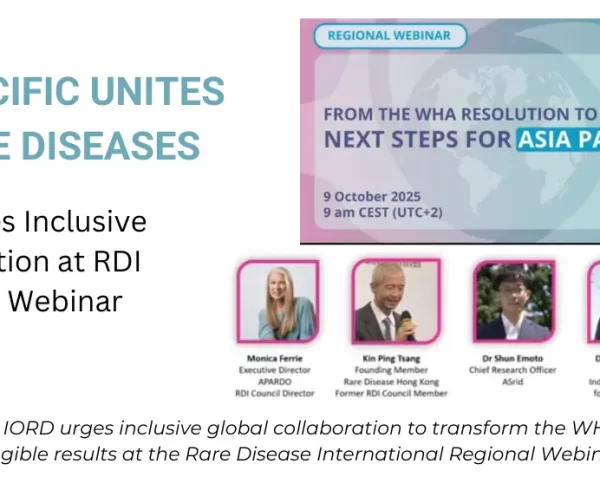
The bid follows the launch of two regional task forces — for the Western Pacific and South East Asia — under RDI’s Regional Engagement Framework. In its first Western Pacific and Southeast Asia Regional Task Force Steering Committee meetings on 23 April 2026 the RDI deliberated on their governance structures, the role of chairs, expected commitments and the cadence of meetings.
The task forces are expected to help design regional advocacy plans linked to the Global Action Plan and support progress toward universal health coverage for people living with rare diseases.
Why it matters
For patients and caregivers, stronger regional coordination could mean faster diagnosis, better access to treatment and more consistent policy attention to rare diseases, which often remain under-recognized in health systems. IORD said it hopes a unified South East Asian rare disease network can accelerate early diagnosis, improve care access and foster research and innovation.