+91-9666438880
indiaord@gmail.com
IORD – Indian Organization for Rare DiseasesIORD – Indian Organization for Rare DiseasesIORD – Indian Organization for Rare DiseasesIORD – Indian Organization for Rare Diseases
  • Home
  • About Us
    • Management Committee
    • Advisory Board
    • Newsletters
    • Newsletter Subscription
  • Rare Diseases
  • Research
  • Services
  • Donate
  • Gallery
    • Photo Gallery
      • World Rare Disease Day – 2023
      • World Rare Disease Day 2020
    • Video Gallery
      • World Rare Disease Day – 2020
      • World Rare Disease Day – 2019
      • World Rare Disease Day – 2018
  • Blog
  • Contact Us

Conventional And Unconventional Medicines in Treating Haemophilia: Dr V. Chandrasekhar

    Home Events Conventional And Unconventional Medicines in Treating Haemophilia: Dr V. Chandrasekhar
    NextPrevious
    Conventional And Unconventional Medicines in Treating Haemophilia

    Conventional And Unconventional Medicines in Treating Haemophilia: Dr V. Chandrasekhar

    By IORD | Events, IORD Updates, Rare Disease News | 0 comment | 7 September, 2022 | 0

    HAEMOPHILIA: An Inherited Condition

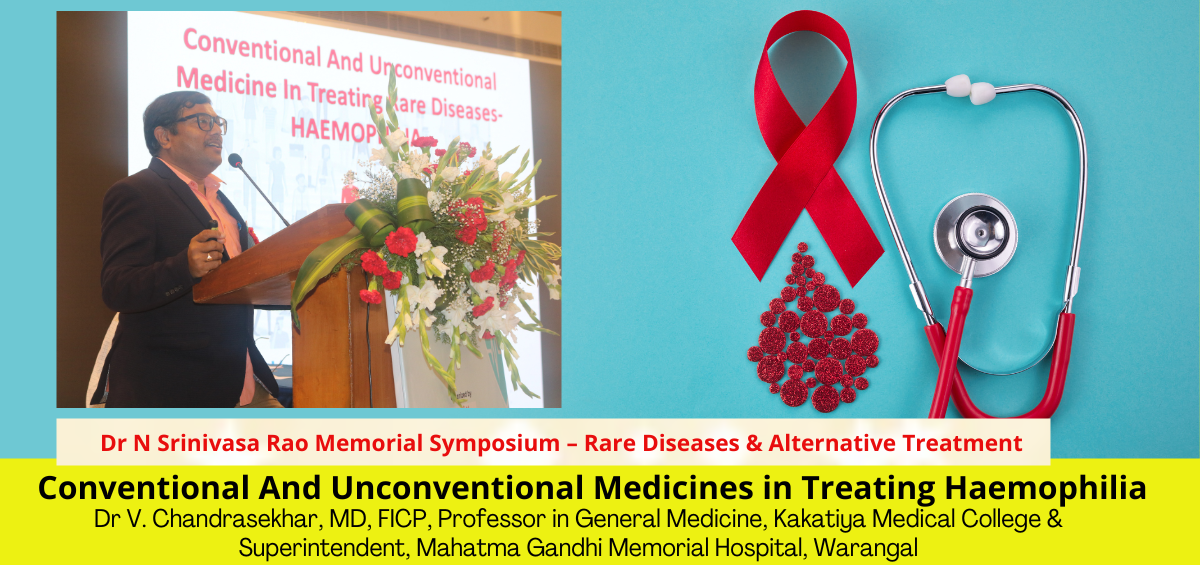
    (This is an abridged version of the presentation delivered by Dr V. Chandrasekhar, MD, FICP, Professor in General Medicine, Kakatiya Medical College & Superintendent, Mahatma Gandhi Memorial Hospital, Warangal, Telangana at the ‘Dr N Srinivasa Rao Memorial Symposium – Rare Diseases & Alternative Treatment’ organized by IORD at Hyderabad on 25th June.)

    Haemophilia is an inherited condition that causes bleeding for a long time after injury or surgery and painful swelling of the joints either after injury or even without injury. Caused due to a deficiency of clotting factor, this results in increased bleeding. 

    There are two types of Haemophilia: 

    1. Haemophilia A (clotting factor VIII deficiency), which is more common and occurs in about 1 in 5,000 births.
    2. Haemophilia B (factor IX deficiency) is less common and occurs in around 1 in about 20,000 births.

    The five countries reporting the highest case detection rate (prevalence) of Hemophilia A (HA) and Hemophilia B (HB) include the USA, India, Brazil, China & the UK respectively. 

    How is it inherited?

    The disease of Haemophilia is X linked and inherited from the mother, though the disease is present in males. A family history of maternal uncles or other male-affected relatives on the mother’s side is often present. Though many cases are due to a newly acquired mutation in the genes, and these families, no family history is present.

    What Happens in Haemophilia?

    Patients with haemophilia, bleed for a longer time than others after any injury, injections, operations or tooth extractions. They may bleed inside (internally), and in the joints – knees, ankles, and elbows. This bleeding can damage the joints and internal bleeding (head, abdomen) may be life-threatening.

    Haemophilia patients bleed for a very long time after injury and often have delayed bleeding e.g. after a few days after tooth extraction or trauma. Patients with severe haemophilia can bleed even without injury-spontaneously, this usually occurs in severe haemophilia patients.

    Bleeding Sites:

    Some important sites of bleeding include the Iliopsoas (a muscle in the hip), knee, ankle, and elbow joints are commonly affected. Some patients may have bleeding in the brain, even after a very minor injury. Occasionally patients may have blood in the urine. 

    Haemophilia: Diagnosis

    1. Family History
    2. Physical examination
    3. Serological tests (PT, APTT, Hemophilia A or B)

    Prevention And Treatment 

    Veins must be treated with care during injections they are the lifelines for a person with haemophilia. Regular exercise and other measures to stimulate normal psychomotor development should be encouraged to promote strong muscles, develop balance and coordination, and improve fitness. Prevention of bleeding can be achieved by pro-phylactic factor replacement. 

    Good oral hygiene is essential to prevent periodontal disease and dental caries, which predispose to gum bleeding.

    Safety Precautions:

    • Patients should avoid activities likely to cause trauma
    • Drugs that affect platelet function, particularly acetylsalicylic acid (ASA) and non-steroidal anti-inflammatory drugs (NSAIDs), except certain COX-2 inhibitors, should be avoided

    Treatment For Hemophilia

    1. Factor concentrates are either prepared by recombinant DNA technology or derived from pools of human plasma.
    2. Currently, there are several recombinant factor VIII (FVIII) products and two recombinant factor IX (FIX) products available with high specific activities (the amount of desired clotting factor per mg of total protein)
    3. Plasma-derived clotting factor products are also available

    The guidelines for treatment Of Hemophilia by the World Federation Of Hemophilia include Episodic (on-demand treatment), treatment given at the time of clinically evident bleeding.

    Primary prophylaxis: Regular continuous treatment initiated in the absence of documented osteochondral joint disease, determined by physical examination and imaging studies, and started before the second clinically evident large joint bleed and age 3 years.

    Secondary prophylaxis: Regular continuous treatment started after 2 or more bleeds into large joints and before the onset of joint disease documented by physical examination and imaging studies

    Tertiary prophylaxis: Regular continuous treatment started after the onset of joint disease documented by physical examination and plain radiographs of the affected joints.

    Intermittent (periodic) prophylaxis: Treatment given to prevent bleeding for periods not exceeding 45 weeks in a year

    Antifibrinolytic agents: There is another treatment mode for Hemophilia using Antifibrinolytic agents. They are particularly effective in areas where fibrinolysis appears to contribute to the prolongation of bleeding, as in mucous membranes (nose, mouth, and throat) and with dental procedures. These agents can be given alone or as an adjunct therapy with DDAVP or factor VIII concentrates. The few that are currently available are Aminocaproic acid and Tranexamic acid

    Complementary and Alternative Therapies:

    Complementary medicine is used along with conventional medicine while alternative medicine is used in place of conventional medicine. However, the term alternative medicine is often used more broadly to include complementary treatments.

    Three important points to keep in mind if you are considering complementary medicine:

    1. You should not start any complementary therapy without talking to your physician first. 
    2. Just because a treatment has not been proven to work in formal clinical testing does not mean it will not work for you.
    3. Complementary treatments are not always safer treatments—for example, some herbal supplements can interfere with the clotting process.

    Types of Complementary Treatments

    Complementary treatment takes many forms, some of which you may not have expected. Generally, they fall into the following broad types.

    1. Natural products: These are often in the form of dietary supplements and include herbal medicines, vitamins, and minerals.
    2. Mind and Body Medicine: This approach focuses on the interactions among the brain, mind, body, and behaviour. It includes meditation, yoga, acupuncture, deep breathing, hypnosis, and more.
    3. Manipulative and Body-based Practices: This approach focuses on body systems and structures such as the bones, joints, soft tissues, and circulatory system, and includes spinal manipulation and massage.
    4. Other types of CAM: Many other forms of CAM exist, including movement therapy, music therapy, and treatments based around energy fields.

    Prognosis/Possible Complications

    1. Most people with haemophilia can manage their condition and lead normal lives. In people who do not receive factor replacement therapy, however, complications include the destruction of bones and joints, life-threatening cysts, bleeding in the brain, gangrene, bleeding into muscles causing damage to nerves, long-term bruising, and anaemia. 
    2. Sudden bleeding can occur with emotional stress. 
    3. Although contracting HIV from blood products is rare, about one-third of people with haemophilia (between the ages of 21 to 60) are infected with HIV. 
    4. Elderly patients with haemophilia may have more difficulties with daily living. 
    5. Following Up every 6 to 12 months.
    Dr V. Chandrasekhar, Haemophilia, IORD, rare disease awareness, Rare Diseases

    IORD

    More posts by IORD

    Related Post

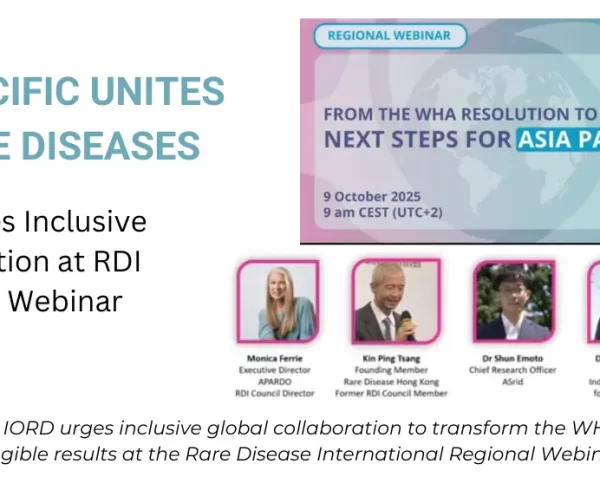
    • IORD leaders urge inclusive, global collaboration to turn the WHA Rare Disease Resolution into real action at the RDI Asia-Pacific Webinar on October 9.

      From Hope to Action: IORD Calls for Inclusive Global Action on Rare Diseases

      By IORD | 0 comment

      The RDI Regional Webinar on “From the WHA Resolution to Action: Next Steps for Asia Pacific” marked a pivotal moment for regional cooperation on rare diseases.   “Hope” — that was the word chosen byRead more

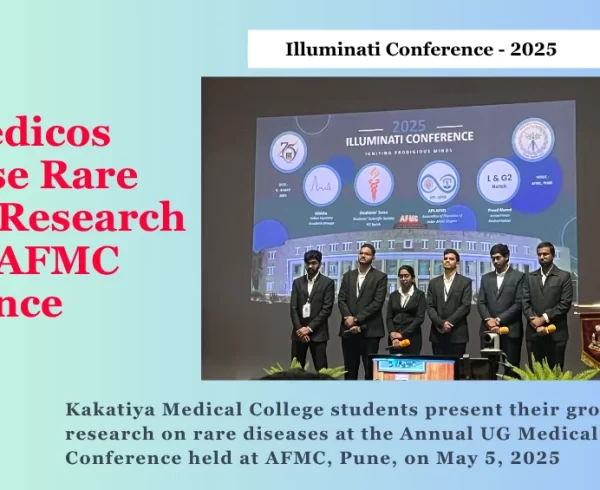
    • Kakatiya Medical College students present their groundbreaking research on rare diseases at the Annual UG Medical Research Conference held at AFMC, Pune, on May 5, 2025.

      Kakatiya Medical College Shines at AFMC Annual UG Medical Research Conference in Pune

      By IORD | 0 comment

      Kakatiya Medical College (KMC), Warangal, made a proud mark at the Annual UG Medical Research Conference held on May 5, 2025, at the prestigious Armed Forces Medical College (AFMC) -Illuminati Conference – in Pune. ARead more

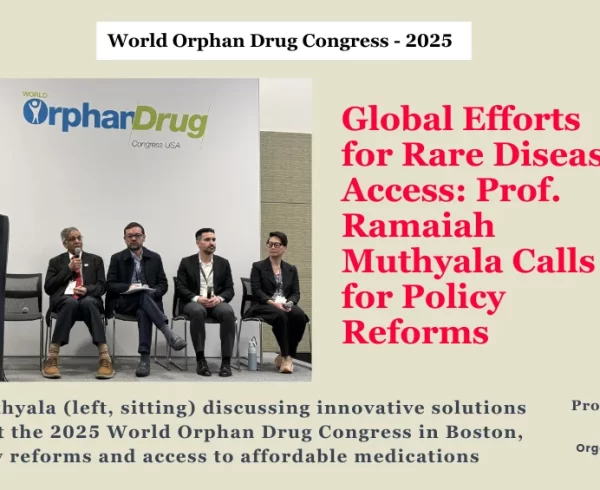
    • Prof. Ramaiah Muthyala (left, sitting) discussing innovative solutions for rare diseases at the 2025 World Orphan Drug Congress in Boston. With a focus on policy reforms and access to affordable medications, the panel addressed the urgent need for systemic change in rare disease care globally

      Prof. Ramaiah Muthyala Calls for Policy Reforms at World Orphan Drug Congress-2025

      By IORD | 0 comment

      Prof. Ramaiah Muthyala discussed challenges and solutions for rare disease access at the 2025 World Orphan Drug Congress in Boston. He highlighted the global economic burden of rare diseases and the unique barriers in low-Read more

    • Prof. Ramaiah Muthyala, CEO & President of IORD, inaugurates the World Rare Disease Day 2025 conference in Vijayawada by lighting the ceremonial lamp in the presence of dignitaries.

      World Rare Disease Day 2025: IORD Advocates for Policy & Awareness

      By IORD | 0 comment

      Vijayawada: The Indian Organization for Rare Diseases (IORD), a non-profit advocacy body, convened a critical conference titled “RAISE THE AWARENESS – RARE DISEASES: Advocate Public Policy, Promote Diagnosis, Treatment & Social Services” at Fortune MuraliRead more

    • This is a transcribed speech of Indian Organisation for Rare Diseases (IORD) President and CEO, Prof. Ramaiah Muthyala delivered at the World Rare Disease Day 2025 conference in Vijayawada, organized by the IORD.

      Prof Ramaiah Muthyala: A Call for Policy Change and Rare Disease Healthcare in Andhra Pradesh

      By IORD | 0 comment

      This is a transcribed speech of Indian Organisation for Rare Diseases (IORD) President and CEO, Prof. Ramaiah Muthyala delivered at the World Rare Disease Day 2025 conference in Vijayawada, organized by the IORD. Check theRead more

    NextPrevious

    Categories

    • ABN Andhra Jyothi
    • ANI
    • Deccan Chronicle
    • Economic Times
    • Eenadu
    • Events
    • IORD in News
    • IORD Updates
    • News
    • Pharmabiz.com
    • Prime9 News
    • Rare Disease News
    • Rare Disease Survivor
    • Sakshi
    • Telangana Today
    • The Hans India
    • The Hindu
    • The Pioneer
    • Times Now
    • Times of India
    • Uncategorised
    • Vaartha

    Recent Posts

    • India: Rare Ophthalmic Disorders Take Centrestage at World Rare Disease Day-2026
    • IORD to Host World Rare Disease Day 2026 Conference Focused on Rare Ophthalmic Conditions
    • Bridging India’s Rare Disease Treatment Gap Through Public-Interest Pharmaceuticals
    • India Steps Forward as a Global Leader in Rare Disease Management
    • From Hope to Action: IORD Calls for Inclusive Global Action on Rare Diseases

    Archives

    • March 2026
    • February 2026
    • January 2026
    • November 2025
    • October 2025
    • September 2025
    • August 2025
    • July 2025
    • June 2025
    • May 2025
    • April 2025
    • March 2025
    • February 2025
    • January 2025
    • December 2024
    • November 2024
    • September 2024
    • July 2024
    • June 2024
    • May 2024
    • March 2024
    • February 2024
    • December 2023
    • October 2023
    • July 2023
    • June 2023
    • May 2023
    • April 2023
    • March 2023
    • February 2023
    • January 2023
    • December 2022
    • November 2022
    • October 2022
    • September 2022
    • August 2022
    • June 2022
    • May 2022
    • April 2022
    • March 2022
    • February 2022
    • January 2022
    • December 2021
    • November 2021
    • October 2021
    • September 2021
    • August 2021
    • July 2021
    • May 2021
    • April 2021
    • November 2020
    • March 2020
    • February 2020
    • January 2020
    • February 2019
    • January 2018
    • September 2015

    IORD

    Indian Organization For Rare Diseases (IORD), a not-for-profit umbrella organization represents interests of all stakeholders of Rare Diseases in India including individual patients, patient support groups, health policy advocates and health care providers.

    RARE DISEASES

    • Rare Blood Diseases
    • Rare Heart Diseases
    • Rare Fungal Diseases
    • Rare Kidney Diseases
    • Rare Newborn Diseases
    • more...

    SERVICES

    • Research
    • Let's Come Together
    • Partner With Us
    • Volunteers
    • Privacy Policy
    • Sitemap

    CONTACT US

    Indian Organization For Rare Diseases
    Registered Office (India):
    Plot No. 397, Road No. 22B, Jubilee Hills, Hyderabad – 500033, Telangana, India.

    Phone: +91-9666438880

    Email: indiaord@gmail.com

    © 2020 Indian Organization For Rare Diseases | All Rights Reserved. Powered By Digital Dynamics
    • Home
    • About Us
      • Management Committee
      • Advisory Board
      • Newsletters
      • Newsletter Subscription
    • Rare Diseases
    • Research
    • Services
    • Donate
    • Gallery
      • Photo Gallery
        • World Rare Disease Day – 2023
        • World Rare Disease Day 2020
      • Video Gallery
        • World Rare Disease Day – 2020
        • World Rare Disease Day – 2019
        • World Rare Disease Day – 2018
    • Blog
    • Contact Us
    IORD – Indian Organization for Rare Diseases