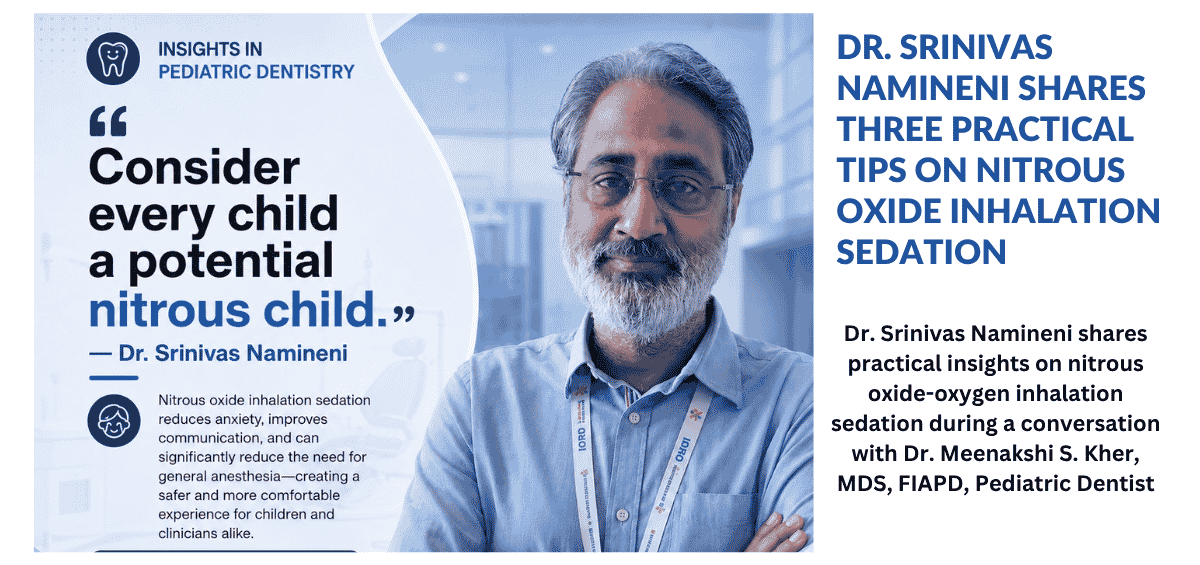
The discussion offers practical insights for pediatric dentists who are considering incorporating nitrous oxide-oxygen inhalation sedation into their clinical practice. Watch the Full Conversation
When Dr. Meenakshi S. Kher trained as a pediatric dentist in the early 1990s, nitrous oxide-oxygen inhalation sedation was not part of formal training. During a conversation with Dr. Srinivas Namineni, Director of IORD and renowned Pediatric Dentist at Rainbow Children’s Hospital, Hyderabad, she recalled learning the technique from him, describing him as her colleague, mentor in inhalation sedation and someone who “pretty much brought the procedure to all of us in India.”
Drawing on decades of clinical experience, Dr Srinivas Namineni shared three practical tips on the use of nitrous oxide-oxygen inhalation sedation in pediatric dentistry. He explained how the technique can reduce stress in children, improve communication and cooperation during treatment, and significantly reduce the need for general anesthesia.”
Tip 1: Be Confident in Using Nitrous Oxide
Addressing the hesitation many dentists experience before using inhalation sedation for the first time, Dr. Namineni encouraged clinicians to approach the technique with confidence.
“If you are comfortable administering local anesthesia and using a dental handpiece, you are already well positioned to use nitrous oxide inhalation sedation,” he explained, adding that the procedure should not be viewed as more intimidating than routine dental practice.
Tip 2: Use a Sedation Machine with a Reservoir Bag
Dr. Namineni advised clinicians to use a nitrous oxide machine equipped with a reservoir bag, describing it as an important indicator of the child’s breathing pattern and minute ventilation. The reservoir bag helps clinicians monitor inhalation more effectively and reduces the likelihood of administering excessive nitrous oxide, making the procedure safer and easier to manage.
Tip 3: Consider Every Child a Potential Nitrous Child
The most memorable message from the conversation was Dr. Namineni’s advice:
“Consider every child a potential nitrous child.”
He explained that inhalation sedation should not be reserved only for highly anxious children. Instead, it can help a wide range of young patients by reducing stress and creating a calmer clinical environment.
According to Dr. Namineni, the technique helps reduce stress in children, allowing them to communicate more comfortably during treatment. It also reduces stress for the clinician, making the overall dental experience more child-friendly.
When asked whether inhalation sedation reduces the need for general anesthesia, Dr. Namineni responded that its appropriate use can reduce the requirement for general anesthesia by about half.
The conversation also highlighted the importance of communicating with children in a playful and reassuring manner.
Sharing one of his favourite approaches, Dr. Namineni described encouraging children to open their mouths by saying, “Open your mouth like a tiger.” Such simple, child-friendly communication, combined with inhalation sedation, helps create a positive dental experience and encourages better cooperation during treatment.
Dr. Namineni’s advice reinforces that, when used appropriately, inhalation sedation can improve the experience for both children and clinicians while reducing the need for more invasive treatment approaches.