+91-9666438880
indiaord@gmail.com
IORD – Indian Organization for Rare DiseasesIORD – Indian Organization for Rare DiseasesIORD – Indian Organization for Rare DiseasesIORD – Indian Organization for Rare Diseases
  • Home
  • About Us
    • Management Committee
    • Advisory Board
    • Newsletters
    • Newsletter Subscription
  • Rare Diseases
  • Research
  • Services
  • Donate
  • Gallery
    • Photo Gallery
      • World Rare Disease Day – 2023
      • World Rare Disease Day 2020
    • Video Gallery
      • World Rare Disease Day – 2020
      • World Rare Disease Day – 2019
      • World Rare Disease Day – 2018
  • Blog
  • Contact Us

Manufacturing Drugs for Selected Rare Diseases: Dr Vinod K Paul

    Home IORD Updates Manufacturing Drugs for Selected Rare Diseases: Dr Vinod K Paul
    NextPrevious
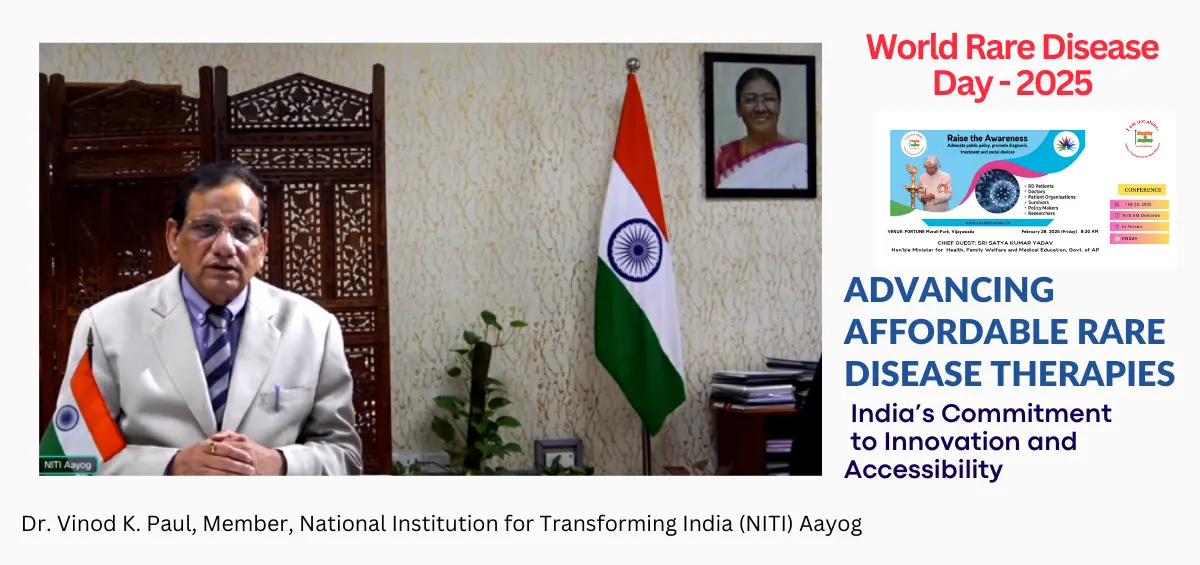
    This is a transcribed speech of Dr. Vinod K. Paul, Member of the National Institution for Transforming India (NITI) Aayog, on "Manufacturing Drugs for Selected Rare Diseases." He delivered this speech at the World Rare Disease Day 2025 conference, organized by the Indian Organisation for Rare Diseases in Vijayawada, Andhra Pradesh, on February 28, 2025.

    Manufacturing Drugs for Selected Rare Diseases: Dr Vinod K Paul

    By IORD | IORD Updates, Rare Disease News | 0 comment | 1 March, 2025 | 1

    Manufacturing Drugs for Selected Rare Diseases: Dr Vinod K Paul

    This is a transcribed speech of Dr. Vinod K. Paul, Member of the National Institution for Transforming India (NITI) Aayog, on “Manufacturing Drugs for Selected Rare Diseases.” He delivered this speech at the World Rare Disease Day 2025 conference, organized by the Indian Organisation for Rare Diseases in Vijayawada, Andhra Pradesh, on February 28, 2025. Check the full video here. 

    Honorable Minister for Health, Family Welfare, and Medical Education, Government of Andhra Pradesh, Shri Satya Kumar Yadav Ji, my distinguished colleague, Dr. Ramaiah Muthyala Ji, esteemed dignitaries on the dais, invitees, scientists, pediatricians, colleagues, and friends,

    I am deeply honored to be connected with you on this World Rare Disease Day 2025. It is a privilege to express my solidarity and full support for your commendable efforts in addressing the challenge of rare diseases in India and beyond. Due to unavoidable circumstances, I am unable to be present in person, but I am grateful to the organizers for providing this virtual platform to engage with you.

    As a pediatrician by training, I have had the good fortune of working with NITI Aayog as part of the policy enabler team of the Government of India. I would like to share an important area of work undertaken by the government. Beyond reaffirming our collective commitment to ensuring the highest levels of health, survival, and quality of life for children born with rare diseases, my primary message today is about the initiatives to provide essential drugs for selected rare diseases and pathways to prevent their occurrence in the future.

    I will now present an overview of the government’s initiatives on providing drugs for selected rare diseases. One of the pressing concerns has been the exorbitant cost of importing life-saving medications for rare diseases. While treatment and therapies for many rare diseases remain unavailable globally, those that do exist are often unaffordable for families in India.

    In collaboration with leading experts, particularly from the pediatric fraternity, we prioritized the treatment of 13 rare disorders. These include:

    • Small molecule drug-treatable disorders: Tyrosinemia Type 1, Gaucher’s Disease, Wilson’s Disease, Dravet/Lennox-Gastaut Syndrome-related seizures, Phenylketonuria (PKU), Hyperammonemia, and Cystic Fibrosis.
    • Genetic therapy or enzyme replacement therapy-requiring disorders: Spinal Muscular Atrophy, Duchenne Muscular Dystrophy, Achondroplasia, Pompe’s Disease, Mucopolysaccharidosis, and Niemann-Pick Disease.
    • Sickle Cell Disease: While not classified as a rare disease, it was included due to its genetic nature and the need for a concerted effort in management.

    For the first group of disorders treatable with small molecule drugs, targeted therapeutics were identified:

    • Tyrosinemia Type 1 – Capsule Nitisinone
    • Gaucher’s Disease – Capsules Eliglustat and Miglustat
    • Wilson’s Disease – Capsule Trientine
    • Lennox-Gastaut Syndrome – Cannabidiol Oral Solution
    • Phenylketonuria – Tablet Sapropterin
    • Hyperammonemia – Tablet Sodium Phenyl Butyrate and Tablet Carglumic Acid
    • Cystic Fibrosis – Tablet Ivacaftor
    • Sickle Cell Disease – Syrup Hydroxyurea

    While tablet hydroxyurea was available, the syrup formulation was not readily accessible in India.

    Through a systematic effort involving the genetic research community, pharmaceutical industry, and the regulatory authority (CDSCO), we streamlined the approval process. I am pleased to report that four drugs are now approved and available in the Indian market:

    1. Nitisinone (Capsules) – for Tyrosinemia Type 1
    2. Eliglustat (Capsules) – for Gaucher’s Disease
    3. Trientine (Capsules) – for Wilson’s Disease
    4. Cannabidiol (Oral Solution) – for Lennox-Gastaut Syndrome or Dravet Syndrome

    The remaining five drugs—Sapropterin, Sodium Phenyl Butyrate, Carglumic Acid, Miglustat, and Ivacaftor—are under process, with significant progress made on Miglustat, which is expected to receive FDA approval within the next few months, followed by Indian regulatory approval later this year.

    A key achievement of manufacturing these drugs in India is the significant reduction in costs, making treatment accessible to more patients. For example:

    • Nitisinone: Previously priced at ₹2.2 crore ($265,000) annually, the Indian version costs ₹3.7 lakh ($4,500), a cost reduction of nearly 1/60.
    • Eliglustat: Originally ₹3.4 crore ($400,000) annually, now available for ₹12 lakh ($15,000), reducing costs by 1/30.
    • Trientine: Previously ₹3.2 crore ($385,000) annually, now just ₹3.5 lakh ($4,200), a 1/90 reduction.
    • Cannabidiol Oral Solution: Reduced from ₹34 lakh ($41,000) to ₹3 lakh ($3,600), making it 11 times more affordable.

    While these drugs are now accessible, the challenge remains in ensuring their widespread availability. Given the limited market demand for rare disease drugs, they cannot be stocked at every pharmacy. Thus, we are exploring alternative distribution models, such as:

    1. Centers of Excellence: Ensuring availability through prescription-based channels.
    2. Direct Manufacturer Supply: Exploring mechanisms where manufacturers directly supply medications to patients based on authentic prescriptions.
    3. Janaushadhi Kendras: Leveraging India’s extensive network of over 15,000 Janaushadhi Kendras, expected to grow to 25,000 soon, to distribute these essential medicines.

    Additionally, syrup hydroxyurea, manufactured in India, will be available at an estimated cost of ₹1,500, compared to ₹70,000 for imported versions. This will soon be integrated into the government’s sickle cell disease mission.

    India is witnessing remarkable advancements in gene and cell therapy. Notably:

    • Indigenous Gene Therapy: In October 2023, India licensed its first indigenous gene therapy for relapsed and refractory B-cell leukemia and lymphomas. Developed by IIT Mumbai and trialed at Tata Memorial Center, this treatment is now available at ₹25 lakh ($30,000), significantly lower than the ₹3.3 crore ($400,000) cost in the US.
    • Gene Therapy for Hemophilia A: Recent research published in the New England Journal of Medicine highlights promising trials of lentiviral gene therapy using CD34+ hematopoietic cells.

    These breakthroughs inspire confidence that India is poised to develop affordable and advanced therapies for even the most complex rare diseases. The government, scientific community, and industry stakeholders are collaborating to establish a Cell and Gene Therapy Mission to drive research, development, and accessibility.

    As we commemorate World Rare Disease Day 2025, I reaffirm my commitment to this noble cause. Our collective mission is not only to develop scientific solutions but also to ensure that treatments reach every affected family. I eagerly anticipate the recommendations from this meeting and assure you of my unwavering support in this journey.

    Thank you and best wishes for a successful event.


    Affordable medicine, Drug accessibility, Enzyme replacement therapy, Gene therapy, Genetic Disorders, Government initiatives, Healthcare innovation, Indian pharmaceutical industry, Indigenous drug manufacturing, Janaushadhi Kendras, NITI Aayog, Pediatric healthcare, Policy enabler, Public health mission, rare disease day 2025, Rare Diseases, World Rare Disease Day

    IORD

    More posts by IORD

    Related Post

    • Inaugural session of World Rare Disease Day 2026 conference in Hyderabad, with experts from IORD, LVPEI, and Rainbow Children’s Hospital

      India: Rare Ophthalmic Disorders Take Centrestage at World Rare Disease Day-2026

      By IORD | 0 comment

      The event, attended by leading ophthalmologists, ocular geneticists, pediatric specialists, researchers, and patient advocates, spotlighted the urgent need for early diagnosis, stronger referral pathways, and expanded genetic and multidisciplinary services to address the growing burdenRead more

    • On World Rare Disease Day 2026, IORD, along with LV Prasad Eye Institute and Rainbow Children’s Hospital, is hosting a scientific conference in Hyderabad focused on Rare Ophthalmic Disorders

      IORD to Host World Rare Disease Day 2026 Conference Focused on Rare Ophthalmic Conditions

      By IORD | 0 comment

      Registration is now open. Limited seats available — register now using this link. Hyderabad, February 2026: The Indian Organisation for Rare Diseases (IORD), in collaboration with L V Prasad Eye Institute (LVPEI) and Rainbow Children’s Hospital,Read more

    • In this letter, IORD urges the Government of India to ensure affordable access to orphan drugs for rare disease patients through a public-interest, Section 8 non-profit pharmaceutical model supported by CSR funding.

      Bridging India’s Rare Disease Treatment Gap Through Public-Interest Pharmaceuticals

      By IORD | 0 comment

      IORD proposes a Section 8, CSR-supported public-interest pharmaceutical model to ensure affordable access to orphan drugs for millions of Indian patients.

    • IORD leaders urge inclusive, global collaboration to turn the WHA Rare Disease Resolution into real action at the RDI Asia-Pacific Webinar on October 9.

      From Hope to Action: IORD Calls for Inclusive Global Action on Rare Diseases

      By IORD | 0 comment

      The RDI Regional Webinar on “From the WHA Resolution to Action: Next Steps for Asia Pacific” marked a pivotal moment for regional cooperation on rare diseases.   “Hope” — that was the word chosen byRead more

    • Delhi High Court clears Natco to launch Risdiplam generic version Natsmart, making SMA treatment affordable for thousands of Indian families.

      Natco Wins Patent Battle, Makes SMA Drug Affordable in India

      By IORD | 0 comment

      Delhi High Court clears Natco to launch Risdiplam generic version Natsmart, making SMA treatment affordable for thousands.

    NextPrevious

    Categories

    • ABN Andhra Jyothi
    • ANI
    • Deccan Chronicle
    • Economic Times
    • Eenadu
    • Events
    • IORD in News
    • IORD Updates
    • News
    • Pharmabiz.com
    • Prime9 News
    • Rare Disease News
    • Rare Disease Survivor
    • Sakshi
    • Telangana Today
    • The Hans India
    • The Hindu
    • The Pioneer
    • Times Now
    • Times of India
    • Uncategorised
    • Vaartha

    Recent Posts

    • India: Rare Ophthalmic Disorders Take Centrestage at World Rare Disease Day-2026
    • IORD to Host World Rare Disease Day 2026 Conference Focused on Rare Ophthalmic Conditions
    • Bridging India’s Rare Disease Treatment Gap Through Public-Interest Pharmaceuticals
    • India Steps Forward as a Global Leader in Rare Disease Management
    • From Hope to Action: IORD Calls for Inclusive Global Action on Rare Diseases

    Archives

    • March 2026
    • February 2026
    • January 2026
    • November 2025
    • October 2025
    • September 2025
    • August 2025
    • July 2025
    • June 2025
    • May 2025
    • April 2025
    • March 2025
    • February 2025
    • January 2025
    • December 2024
    • November 2024
    • September 2024
    • July 2024
    • June 2024
    • May 2024
    • March 2024
    • February 2024
    • December 2023
    • October 2023
    • July 2023
    • June 2023
    • May 2023
    • April 2023
    • March 2023
    • February 2023
    • January 2023
    • December 2022
    • November 2022
    • October 2022
    • September 2022
    • August 2022
    • June 2022
    • May 2022
    • April 2022
    • March 2022
    • February 2022
    • January 2022
    • December 2021
    • November 2021
    • October 2021
    • September 2021
    • August 2021
    • July 2021
    • May 2021
    • April 2021
    • November 2020
    • March 2020
    • February 2020
    • January 2020
    • February 2019
    • January 2018
    • September 2015

    IORD

    Indian Organization For Rare Diseases (IORD), a not-for-profit umbrella organization represents interests of all stakeholders of Rare Diseases in India including individual patients, patient support groups, health policy advocates and health care providers.

    RARE DISEASES

    • Rare Blood Diseases
    • Rare Heart Diseases
    • Rare Fungal Diseases
    • Rare Kidney Diseases
    • Rare Newborn Diseases
    • more...

    SERVICES

    • Research
    • Let's Come Together
    • Partner With Us
    • Volunteers
    • Privacy Policy
    • Sitemap

    CONTACT US

    Indian Organization For Rare Diseases
    Registered Office (India):
    Plot No. 397, Road No. 22B, Jubilee Hills, Hyderabad – 500033, Telangana, India.

    Phone: +91-9666438880

    Email: indiaord@gmail.com

    © 2020 Indian Organization For Rare Diseases | All Rights Reserved. Powered By Digital Dynamics
    • Home
    • About Us
      • Management Committee
      • Advisory Board
      • Newsletters
      • Newsletter Subscription
    • Rare Diseases
    • Research
    • Services
    • Donate
    • Gallery
      • Photo Gallery
        • World Rare Disease Day – 2023
        • World Rare Disease Day 2020
      • Video Gallery
        • World Rare Disease Day – 2020
        • World Rare Disease Day – 2019
        • World Rare Disease Day – 2018
    • Blog
    • Contact Us
    IORD – Indian Organization for Rare Diseases