This potential collaboration represents a major milestone for rare disease advocacy in India and could create new benchmarks for state-level policy action, medical workforce training, and public awareness.
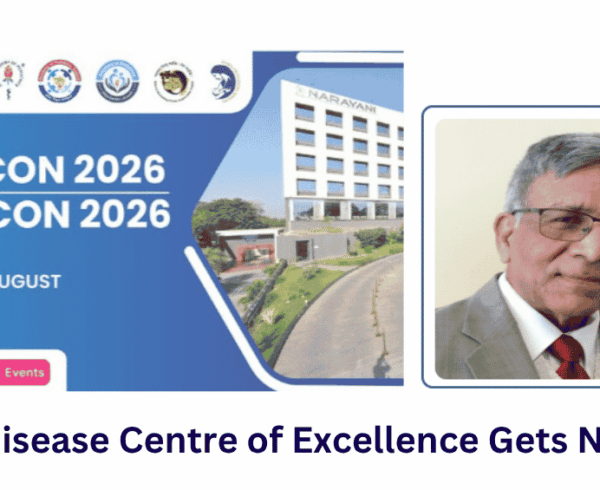
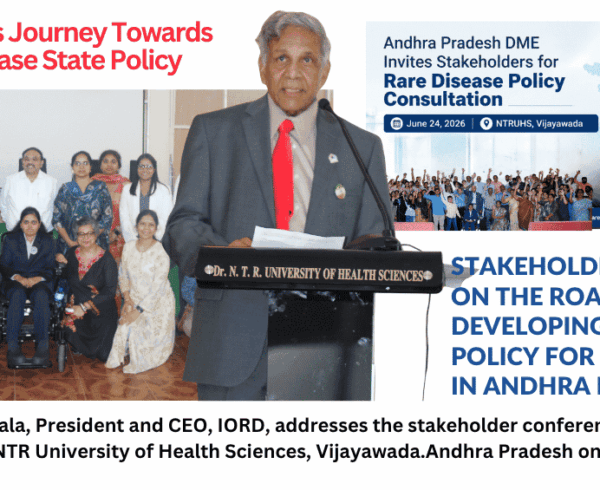
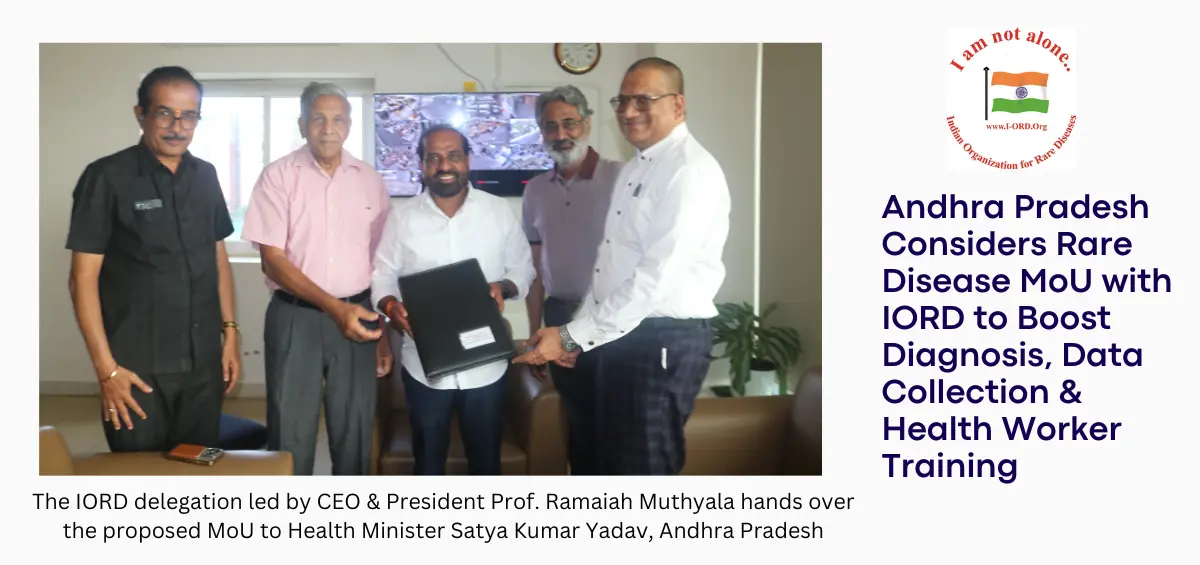
Vijayawada, Andhra Pradesh: The Indian Organisation for Rare Diseases (IORD) has initiated a strategic collaboration with the Andhra Pradesh government to strengthen the state’s rare disease ecosystem, with a formal proposal submitted during a high-level meeting held at the office of Director of Secondary Health, Vijayawada. Prof. Ramaiah Muthyala, President and CEO of IORD, met Andhra Pradesh Health Minister Mr. Satya Kumar Yadav to present a draft Memorandum of Understanding (MoU) aimed at improving diagnosis, treatment, and policy development for rare diseases in the state.
The meeting took place in the presence of Dr. A. Siri, IAS, Director of Secondary Health, AP Health Medical & Family Welfare Department, Government of Andhra Pradesh. It focused on integrating IORD’s rare disease initiatives into the state’s public health strategy. Key areas proposed under the MoU include capacity building of healthcare workers, including ASHAs, ANMs and paramedics and development of a rare disease registry to guide evidence-based policymaking.
Prof. Ramaiah emphasized the urgent need for training frontline health personnel to ensure early diagnosis and better clinical management for rare disease patients. He stated that enhancing knowledge at the grassroots level is critical for early diagnosis and long-term care, which is often delayed in rare disease cases due to limited awareness and infrastructure.
Highlighting the government’s commitment to improving healthcare delivery, Health Minister Mr. Satya Kumar Yadav confirmed that Andhra Pradesh has already secured ₹480 crore in central funding under various schemes such as the National Rural Health Mission.
The IORD delegation also included Dr. Srinivas Namineni, pediatric dentist and IORD member, and Dr. Krishnaji Rao Muthyala, Secretary of IORD. Both reiterated the organisation’s readiness to support Andhra Pradesh in emerging as a model state in rare disease care in the country.
This collaboration, if formalized, could mark a significant step toward inclusive healthcare by integrating rare diseases into the mainstream health agenda of the state, potentially benefiting thousands of undiagnosed or misdiagnosed patients.