+91-9666438880
indiaord@gmail.com
IORD – Indian Organization for Rare DiseasesIORD – Indian Organization for Rare DiseasesIORD – Indian Organization for Rare DiseasesIORD – Indian Organization for Rare Diseases
  • Home
  • About Us
    • Management Committee
    • Advisory Board
    • Newsletters
    • Newsletter Subscription
  • Rare Diseases
  • Research
  • Services
  • Donate
  • Gallery
    • Photo Gallery
      • World Rare Disease Day – 2023
      • World Rare Disease Day 2020
    • Video Gallery
      • World Rare Disease Day – 2020
      • World Rare Disease Day – 2019
      • World Rare Disease Day – 2018
  • Blog
  • Contact Us

IORD & Rare Diseases in India: Impact, Initiatives & Challenges

    Home IORD Updates IORD & Rare Diseases in India: Impact, Initiatives & Challenges
    NextPrevious
    IORD & Rare Diseases in India: Impact, Initiatives & Challenges

    IORD & Rare Diseases in India: Impact, Initiatives & Challenges

    By IORD | IORD Updates, Rare Disease News | 0 comment | 5 December, 2024 | 0

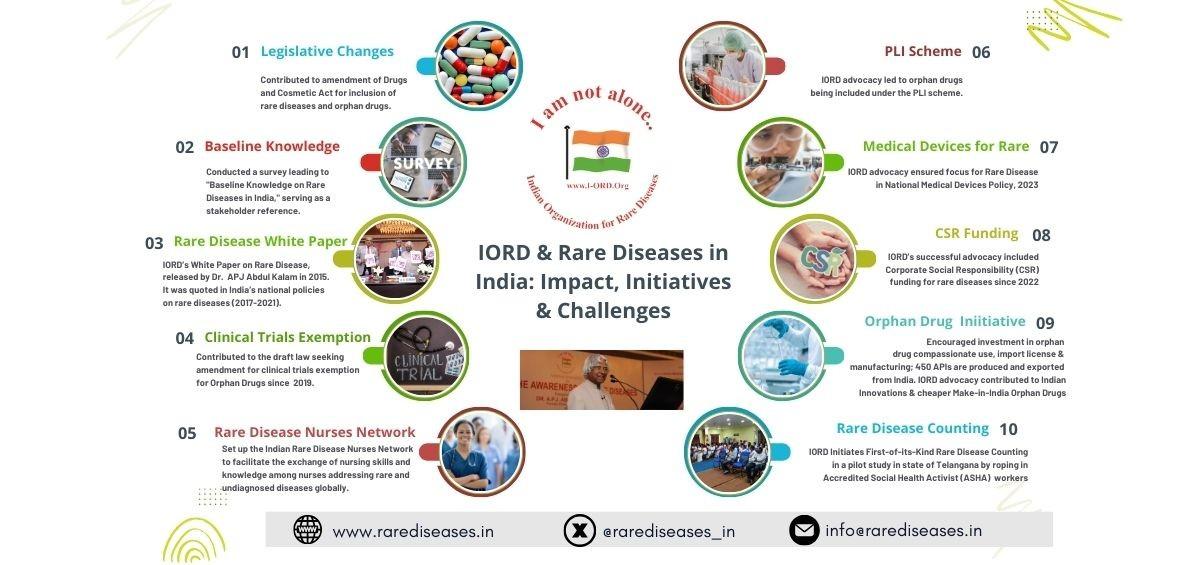
    Rare diseases, though affecting a small percentage of the population, represent a significant public health challenge in India. The Indian Organisation for Rare Diseases (IORD) has been at the forefront of advocating for policies, raising awareness, and improving treatment access. Rare diseases not only lead to the loss of human productivity but also place a heavy financial and emotional burden on families. To combat these challenges, IORD works tirelessly to bring together policymakers, patient groups, healthcare providers, and industry stakeholders to create sustainable solutions. Check video here!

    Impact

    • Policy Advocacy:
      IORD played a crucial role in the amendment of the Drugs and Cosmetics Act to include rare diseases and orphan drugs. Additionally, its efforts ensured that orphan drugs were included under the ₹15,000 crore Production Linked Incentive (PLI) scheme and in the National Medical Devices Policy, 2023.
    • Awareness and Research:
      IORD’s survey, “Baseline Knowledge on Rare Diseases in India,” highlighted a significant lack of awareness among health professionals. Their White Paper on Rare Diseases, released by former President Dr. APJ Abdul Kalam in 2015, has been a foundational reference for India’s national policies.
    • Cost Relief and Innovations:
      The Indian government waived customs duty on essential drugs and food items for rare diseases. IORD’s advocacy encouraged “Make in India” orphan drug manufacturing, with 450 active pharmaceutical ingredients (APIs) now produced domestically.
    • Global Collaboration:
      IORD facilitated partnerships in genome editing and genetic therapy research, emphasizing the importance of international collaboration.

    Initiatives

    • Surveys and Registries:
      IORD conducted a landmark survey revealing that 43% of health professionals had never encountered a rare disease patient. The ICMR National Registry for Rare and Other Inherited Disorders was launched in 2019 to document cases, though uptake remains limited.
    • Innovative Projects:
      The Rare Disease Counting Pilot Project in Telangana, in collaboration with Project Y and international partners, aims to better estimate the prevalence of rare diseases.
    • Support Networks:
      The Indian Rare Disease Nurses Network was established to share expertise in managing rare and undiagnosed diseases.
    • National Policies:
      IORD’s advocacy influenced the National Policy on Research and Development and Innovation in Pharma-MedTech, and programs like PRIP to promote pharmaceutical innovation.

    Challenges

    • High Costs:
      India exports most APIs for rare disease drugs but imports finished products at exorbitant costs. For example, Trientine, used for Wilson’s disease, costs ₹1.6 crore annually when imported.
    • Limited Diagnosis:
      Despite 12 Centres of Excellence (CoEs) and 5 Nidaan Centres, patients face delays of up to 20 years for a diagnosis.
    • Data Gaps:
      The Census 2021 failed to include questions about rare diseases, leaving a significant gap in patient data. Only 14,994 cases have been documented in the national registry since 2019.
    • Ineffective Crowdfunding:
      The national crowdfunding platform for rare diseases has raised just ₹358,232, proving it to be an unsustainable funding model.
    • Underutilized Funds:
      CoEs spent only 48.7% of allocated funds between 2021 and 2024, highlighting inefficiencies in fund utilization.
    • Policy Shortcomings:
      Bureaucratic delays and the absence of a centralized knowledge repository hinder effective rare disease management. The Office for Orphan Products Development (OOPD) proposed by IORD is yet to be established.
    • Ethical Challenges:
      Pharma researchers face the dual burden of addressing ethical issues and ensuring accessibility for domestic patients while balancing global collaborations.

    Conclusion

    IORD’s advocacy and initiatives are paving the way for better rare disease management in India, but significant hurdles remain. Addressing these challenges requires a collaborative effort between the government, healthcare providers, pharmaceutical companies, and patient groups. With sustained focus on innovation, awareness, and efficient policy implementation, the vision of accessible care for rare disease patients in India can become a reality.

    Challenges in rare disease diagnosis, Indian Organisation for Rare Diseases (IORD), Make-in-India Orphan Drugs, National Policy for Rare Diseases 2021, Orphan Drug Act, Orphan Drugs, Rare Disease, rare disease advocacy, rare disease awareness, Rare Disease Nurses Network, rare disease policy India, Rare Disease White Paper, Rare Diseases, rare diseases documentary, Rare Diseases in India

    IORD

    More posts by IORD

    Related Post

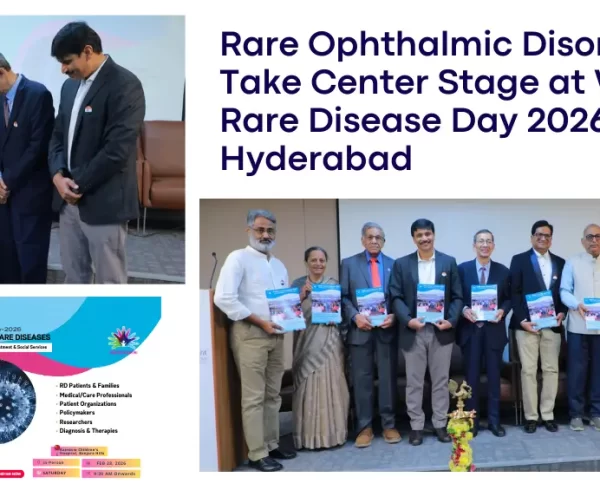
    • Inaugural session of World Rare Disease Day 2026 conference in Hyderabad, with experts from IORD, LVPEI, and Rainbow Children’s Hospital

      India: Rare Ophthalmic Disorders Take Centrestage at World Rare Disease Day-2026

      By IORD | 0 comment

      The event, attended by leading ophthalmologists, ocular geneticists, pediatric specialists, researchers, and patient advocates, spotlighted the urgent need for early diagnosis, stronger referral pathways, and expanded genetic and multidisciplinary services to address the growing burdenRead more

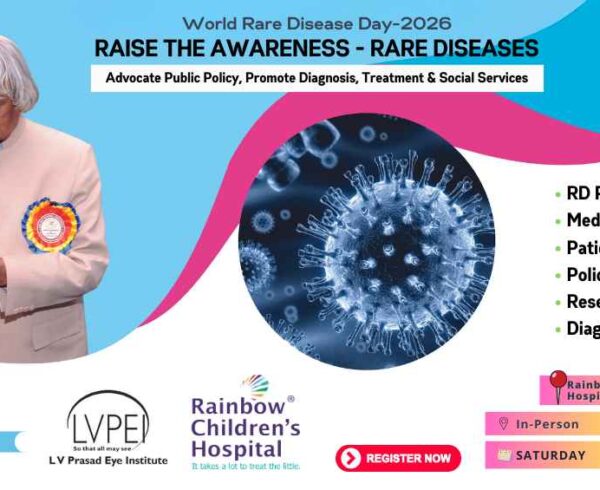
    • On World Rare Disease Day 2026, IORD, along with LV Prasad Eye Institute and Rainbow Children’s Hospital, is hosting a scientific conference in Hyderabad focused on Rare Ophthalmic Disorders

      IORD to Host World Rare Disease Day 2026 Conference Focused on Rare Ophthalmic Conditions

      By IORD | 0 comment

      Registration is now open. Limited seats available — register now using this link. Hyderabad, February 2026: The Indian Organisation for Rare Diseases (IORD), in collaboration with L V Prasad Eye Institute (LVPEI) and Rainbow Children’s Hospital,Read more

    • In this letter, IORD urges the Government of India to ensure affordable access to orphan drugs for rare disease patients through a public-interest, Section 8 non-profit pharmaceutical model supported by CSR funding.

      Bridging India’s Rare Disease Treatment Gap Through Public-Interest Pharmaceuticals

      By IORD | 0 comment

      IORD proposes a Section 8, CSR-supported public-interest pharmaceutical model to ensure affordable access to orphan drugs for millions of Indian patients.

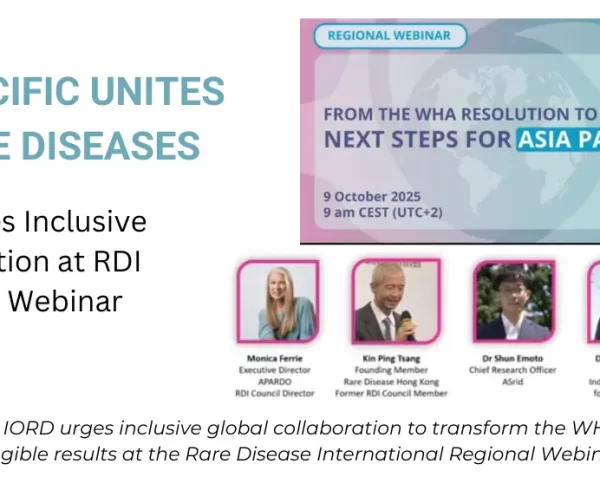
    • IORD leaders urge inclusive, global collaboration to turn the WHA Rare Disease Resolution into real action at the RDI Asia-Pacific Webinar on October 9.

      From Hope to Action: IORD Calls for Inclusive Global Action on Rare Diseases

      By IORD | 0 comment

      The RDI Regional Webinar on “From the WHA Resolution to Action: Next Steps for Asia Pacific” marked a pivotal moment for regional cooperation on rare diseases.   “Hope” — that was the word chosen byRead more

    • Delhi High Court clears Natco to launch Risdiplam generic version Natsmart, making SMA treatment affordable for thousands of Indian families.

      Natco Wins Patent Battle, Makes SMA Drug Affordable in India

      By IORD | 0 comment

      Delhi High Court clears Natco to launch Risdiplam generic version Natsmart, making SMA treatment affordable for thousands.

    NextPrevious

    Categories

    • ABN Andhra Jyothi
    • ANI
    • Deccan Chronicle
    • Economic Times
    • Eenadu
    • Events
    • IORD in News
    • IORD Updates
    • News
    • Pharmabiz.com
    • Prime9 News
    • Rare Disease News
    • Rare Disease Survivor
    • Sakshi
    • Telangana Today
    • The Hans India
    • The Hindu
    • The Pioneer
    • Times Now
    • Times of India
    • Uncategorised
    • Vaartha

    Recent Posts

    • India: Rare Ophthalmic Disorders Take Centrestage at World Rare Disease Day-2026
    • IORD to Host World Rare Disease Day 2026 Conference Focused on Rare Ophthalmic Conditions
    • Bridging India’s Rare Disease Treatment Gap Through Public-Interest Pharmaceuticals
    • India Steps Forward as a Global Leader in Rare Disease Management
    • From Hope to Action: IORD Calls for Inclusive Global Action on Rare Diseases

    Archives

    • March 2026
    • February 2026
    • January 2026
    • November 2025
    • October 2025
    • September 2025
    • August 2025
    • July 2025
    • June 2025
    • May 2025
    • April 2025
    • March 2025
    • February 2025
    • January 2025
    • December 2024
    • November 2024
    • September 2024
    • July 2024
    • June 2024
    • May 2024
    • March 2024
    • February 2024
    • December 2023
    • October 2023
    • July 2023
    • June 2023
    • May 2023
    • April 2023
    • March 2023
    • February 2023
    • January 2023
    • December 2022
    • November 2022
    • October 2022
    • September 2022
    • August 2022
    • June 2022
    • May 2022
    • April 2022
    • March 2022
    • February 2022
    • January 2022
    • December 2021
    • November 2021
    • October 2021
    • September 2021
    • August 2021
    • July 2021
    • May 2021
    • April 2021
    • November 2020
    • March 2020
    • February 2020
    • January 2020
    • February 2019
    • January 2018
    • September 2015

    IORD

    Indian Organization For Rare Diseases (IORD), a not-for-profit umbrella organization represents interests of all stakeholders of Rare Diseases in India including individual patients, patient support groups, health policy advocates and health care providers.

    RARE DISEASES

    • Rare Blood Diseases
    • Rare Heart Diseases
    • Rare Fungal Diseases
    • Rare Kidney Diseases
    • Rare Newborn Diseases
    • more...

    SERVICES

    • Research
    • Let's Come Together
    • Partner With Us
    • Volunteers
    • Privacy Policy
    • Sitemap

    CONTACT US

    Indian Organization For Rare Diseases
    Registered Office (India):
    Plot No. 397, Road No. 22B, Jubilee Hills, Hyderabad – 500033, Telangana, India.

    Phone: +91-9666438880

    Email: indiaord@gmail.com

    © 2020 Indian Organization For Rare Diseases | All Rights Reserved. Powered By Digital Dynamics
    • Home
    • About Us
      • Management Committee
      • Advisory Board
      • Newsletters
      • Newsletter Subscription
    • Rare Diseases
    • Research
    • Services
    • Donate
    • Gallery
      • Photo Gallery
        • World Rare Disease Day – 2023
        • World Rare Disease Day 2020
      • Video Gallery
        • World Rare Disease Day – 2020
        • World Rare Disease Day – 2019
        • World Rare Disease Day – 2018
    • Blog
    • Contact Us
    IORD – Indian Organization for Rare Diseases