+91-9666438880
indiaord@gmail.com
IORD – Indian Organization for Rare DiseasesIORD – Indian Organization for Rare DiseasesIORD – Indian Organization for Rare DiseasesIORD – Indian Organization for Rare Diseases
  • Home
  • About Us
    • Management Committee
    • Advisory Board
    • Newsletters
    • Newsletter Subscription
  • Rare Diseases
  • Research
  • Services
  • Donate
  • Gallery
    • Photo Gallery
      • World Rare Disease Day – 2023
      • World Rare Disease Day 2020
    • Video Gallery
      • World Rare Disease Day – 2020
      • World Rare Disease Day – 2019
      • World Rare Disease Day – 2018
  • Blog
  • Contact Us

Advik Pravin Deshmukh: Living with Ultra Rare Disease Propionic Acidemia

    Home Rare Disease News Advik Pravin Deshmukh: Living with Ultra Rare Disease Propionic Acidemia
    NextPrevious
    Propionic acidemia ultra rare disease

    Advik Pravin Deshmukh: Living with Ultra Rare Disease Propionic Acidemia

    By IORD | Rare Disease News | 0 comment | 14 May, 2022 | 0

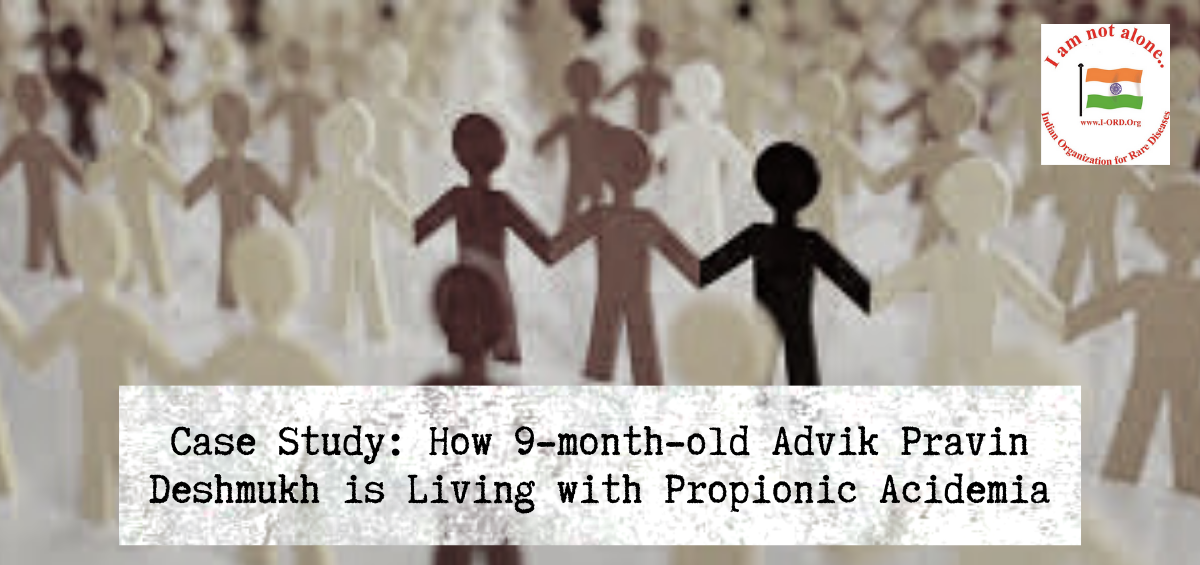
    Nine-month-old Advik Pravin Deshmukh from Maharashtra has been battling Propionic Acidemia – an ultra-rare disorder. It leaves one with a serious and life-threatening inherited metabolic disorder.  

    For Advik Pravin, the diagnosis of this rare metabolic disease can be termed to have happened on time as there is more likelihood of this ultra-rare disease not getting diagnosed. 

    Research data shows that the detection rates of this rare metabolic disorder stand at a very low level with Asia-Pacific region having the lowest rate of 0.29, according to a study. 

    For Europe, North America and the Middle East and North Africa (MENA) regions, the detection rate for Propionic Acidemia stand at 0.33; 0.33 and 4.24 respectively.

    What happens in Propionic acidemia?

    This rare metabolic disorder leads to accumulation of toxic metabolites such as propionic acid and 2-methylcitrate due to deficiency of the mitochondrial enzyme propionyl-coenzyme A (CoA) carboxylase.

    Advik Pravin Deshmukh: A Case Study

    Born in the month of August, 2021, Advik Pravin Deshmukh had a normal birth weighing at 2.8 kg. “Everything seemed normal for Advik till he was six months. He developed normal growth and was able to rollover, had neck control and was able to sit with support,” Pravin Deshmukh, father of Advik, told IORD. 

    Eventually, the parents noticed changes as he could not reach the following normal milestones: smiling, neck control, rollover, following and grabbing objects. During this period, he remained constipated (no stool passed for 10-12 days) and had increased irritability, overall was very lethargic and was sleepy for most of day.

    It was soon followed by his first metabolic crisis at age of 7 months. On 5th April 2022, babu Advik stopped eating food and was excessively crying, stopped responding to parents, refused breast milk and his other drinks. He was admitted to a super-speciality hospital with complaints of heavy breathing.

    Rare Disease Diagnosis: Advik Pravin Deshmukh

    In the case of Advik, his diagnosis of Propionic acidemia came through a neurologist following a referral to the superspecialist doctor.

    Medical Management:

    With the current level of research & drug development available for treatment and management of Propionic acidemia, there are no approved therapies as of now. The only option is symptomatic medical management of the rare disease through dietary management with supplements.

    Scientific literature on Propionic acidemia recommends “carnitine supplementation, antibiotics such as metronidazole to reduce propionate production by intestinal bacteria, and ammonia scavengers such as carglumic acid to control episodes of hyperammonemia” for its medical management.

    Liver transplant is also seen as a viable option for severely affected patients with this rare disease.

    In the case of Advik, his medical management of the condition is being done through special formula food with modified amino acid) 8 grams x 5 times a day.

    “His growth & development is now improving post the metabolic crisis. He now reacts to sound and recognize family members. He smiles too now, and while playing, he has started holding objects. However, still he hasn’t got back his neck control,” his father informed IORD.

    Scientific Literature: Prognosis

    The prognosis of Propionic acidemia is poor, according to available scientific literature though case to case may differ based on different factors. 

    Priopionic acidemia can result in the following manifestations:

    • growth impairment
    • movement disorders
    • seizures
    • basal ganglia lesions
    • pancreatitis
    • cardiomyopathy
    • intellectual disability
    • speech delay
    Propionic acidemia, Rare Disease, rare disease awareness, Rare Diseases, rare metabolic disorder, ultra rare disease

    IORD

    More posts by IORD

    Related Post

    • Inaugural session of World Rare Disease Day 2026 conference in Hyderabad, with experts from IORD, LVPEI, and Rainbow Children’s Hospital

      India: Rare Ophthalmic Disorders Take Centrestage at World Rare Disease Day-2026

      By IORD | 0 comment

      The event, attended by leading ophthalmologists, ocular geneticists, pediatric specialists, researchers, and patient advocates, spotlighted the urgent need for early diagnosis, stronger referral pathways, and expanded genetic and multidisciplinary services to address the growing burdenRead more

    • On World Rare Disease Day 2026, IORD, along with LV Prasad Eye Institute and Rainbow Children’s Hospital, is hosting a scientific conference in Hyderabad focused on Rare Ophthalmic Disorders

      IORD to Host World Rare Disease Day 2026 Conference Focused on Rare Ophthalmic Conditions

      By IORD | 0 comment

      Registration is now open. Limited seats available — register now using this link. Hyderabad, February 2026: The Indian Organisation for Rare Diseases (IORD), in collaboration with L V Prasad Eye Institute (LVPEI) and Rainbow Children’s Hospital,Read more

    • In this letter, IORD urges the Government of India to ensure affordable access to orphan drugs for rare disease patients through a public-interest, Section 8 non-profit pharmaceutical model supported by CSR funding.

      Bridging India’s Rare Disease Treatment Gap Through Public-Interest Pharmaceuticals

      By IORD | 0 comment

      IORD proposes a Section 8, CSR-supported public-interest pharmaceutical model to ensure affordable access to orphan drugs for millions of Indian patients.

    • IORD leaders urge inclusive, global collaboration to turn the WHA Rare Disease Resolution into real action at the RDI Asia-Pacific Webinar on October 9.

      From Hope to Action: IORD Calls for Inclusive Global Action on Rare Diseases

      By IORD | 0 comment

      The RDI Regional Webinar on “From the WHA Resolution to Action: Next Steps for Asia Pacific” marked a pivotal moment for regional cooperation on rare diseases.   “Hope” — that was the word chosen byRead more

    • Delhi High Court clears Natco to launch Risdiplam generic version Natsmart, making SMA treatment affordable for thousands of Indian families.

      Natco Wins Patent Battle, Makes SMA Drug Affordable in India

      By IORD | 0 comment

      Delhi High Court clears Natco to launch Risdiplam generic version Natsmart, making SMA treatment affordable for thousands.

    NextPrevious

    Categories

    • ABN Andhra Jyothi
    • ANI
    • Deccan Chronicle
    • Economic Times
    • Eenadu
    • Events
    • IORD in News
    • IORD Updates
    • News
    • Pharmabiz.com
    • Prime9 News
    • Rare Disease News
    • Rare Disease Survivor
    • Sakshi
    • Telangana Today
    • The Hans India
    • The Hindu
    • The Pioneer
    • Times Now
    • Times of India
    • Uncategorised
    • Vaartha

    Recent Posts

    • India: Rare Ophthalmic Disorders Take Centrestage at World Rare Disease Day-2026
    • IORD to Host World Rare Disease Day 2026 Conference Focused on Rare Ophthalmic Conditions
    • Bridging India’s Rare Disease Treatment Gap Through Public-Interest Pharmaceuticals
    • India Steps Forward as a Global Leader in Rare Disease Management
    • From Hope to Action: IORD Calls for Inclusive Global Action on Rare Diseases

    Archives

    • March 2026
    • February 2026
    • January 2026
    • November 2025
    • October 2025
    • September 2025
    • August 2025
    • July 2025
    • June 2025
    • May 2025
    • April 2025
    • March 2025
    • February 2025
    • January 2025
    • December 2024
    • November 2024
    • September 2024
    • July 2024
    • June 2024
    • May 2024
    • March 2024
    • February 2024
    • December 2023
    • October 2023
    • July 2023
    • June 2023
    • May 2023
    • April 2023
    • March 2023
    • February 2023
    • January 2023
    • December 2022
    • November 2022
    • October 2022
    • September 2022
    • August 2022
    • June 2022
    • May 2022
    • April 2022
    • March 2022
    • February 2022
    • January 2022
    • December 2021
    • November 2021
    • October 2021
    • September 2021
    • August 2021
    • July 2021
    • May 2021
    • April 2021
    • November 2020
    • March 2020
    • February 2020
    • January 2020
    • February 2019
    • January 2018
    • September 2015

    IORD

    Indian Organization For Rare Diseases (IORD), a not-for-profit umbrella organization represents interests of all stakeholders of Rare Diseases in India including individual patients, patient support groups, health policy advocates and health care providers.

    RARE DISEASES

    • Rare Blood Diseases
    • Rare Heart Diseases
    • Rare Fungal Diseases
    • Rare Kidney Diseases
    • Rare Newborn Diseases
    • more...

    SERVICES

    • Research
    • Let's Come Together
    • Partner With Us
    • Volunteers
    • Privacy Policy
    • Sitemap

    CONTACT US

    Indian Organization For Rare Diseases
    Registered Office (India):
    Plot No. 397, Road No. 22B, Jubilee Hills, Hyderabad – 500033, Telangana, India.

    Phone: +91-9666438880

    Email: indiaord@gmail.com

    © 2020 Indian Organization For Rare Diseases | All Rights Reserved. Powered By Digital Dynamics
    • Home
    • About Us
      • Management Committee
      • Advisory Board
      • Newsletters
      • Newsletter Subscription
    • Rare Diseases
    • Research
    • Services
    • Donate
    • Gallery
      • Photo Gallery
        • World Rare Disease Day – 2023
        • World Rare Disease Day 2020
      • Video Gallery
        • World Rare Disease Day – 2020
        • World Rare Disease Day – 2019
        • World Rare Disease Day – 2018
    • Blog
    • Contact Us
    IORD – Indian Organization for Rare Diseases