+91-9666438880
indiaord@gmail.com
IORD – Indian Organization for Rare DiseasesIORD – Indian Organization for Rare DiseasesIORD – Indian Organization for Rare DiseasesIORD – Indian Organization for Rare Diseases
  • Home
  • About Us
    • Management Committee
    • Advisory Board
    • Newsletters
    • Newsletter Subscription
  • Rare Diseases
  • Research
  • Services
  • Donate
  • Gallery
    • Photo Gallery
      • World Rare Disease Day – 2023
      • World Rare Disease Day 2020
    • Video Gallery
      • World Rare Disease Day – 2020
      • World Rare Disease Day – 2019
      • World Rare Disease Day – 2018
  • Blog
  • Contact Us

RJS PBH Webinar: Prof. Ramaiah Muthyala’s Keynote on World Health Day 2025

    Home IORD Updates RJS PBH Webinar: Prof. Ramaiah Muthyala’s Keynote on World Health Day 2025
    NextPrevious
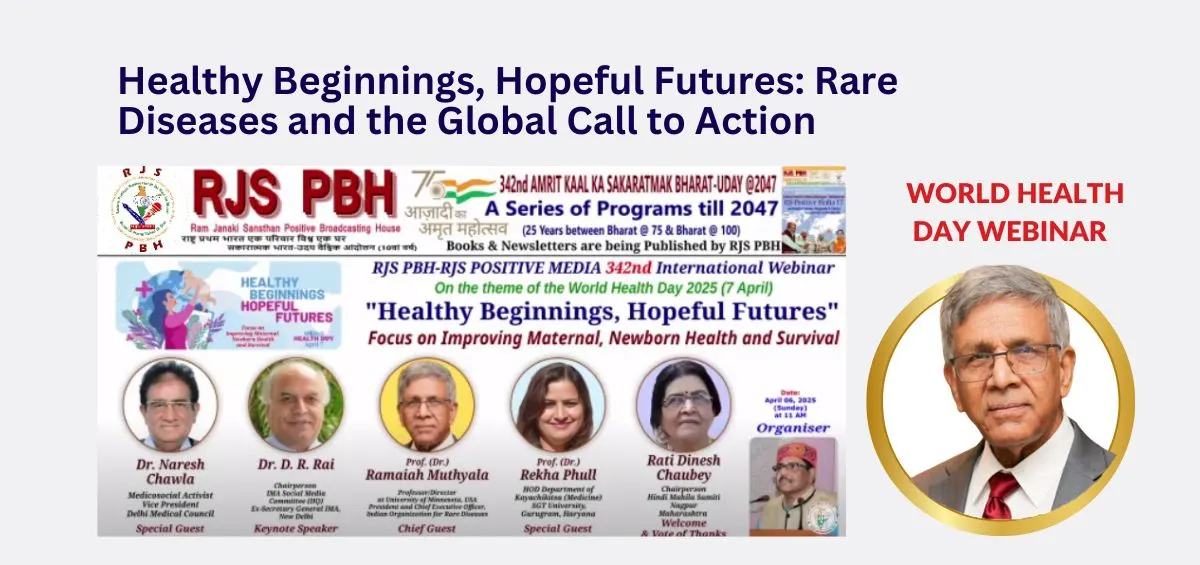
    Prof. (Dr.) Ramaiah Muthyala, President & CEO of the Indian Organization for Rare Diseases (IORD) and Director at the University of Minnesota, delivered a keynote address on the theme "Healthy Beginnings, Hopeful Futures" during the 342nd International Webinar hosted by RJS PBH-RJS Positive Media.

    RJS PBH Webinar: Prof. Ramaiah Muthyala’s Keynote on World Health Day 2025

    By IORD | IORD Updates, Rare Disease News | 0 comment | 11 April, 2025 | 0

    The following is the transcript of the address delivered by Prof. (Dr.) Ramaiah Muthyala, President & CEO, Indian Organization for Rare Diseases (IORD), Professor & Director, University of Minnesota, USA on the theme “Healthy Beginnings, Hopeful Futures: Rare Diseases and the Global Call to Action”, presented during the 342nd International Webinar organized by RJS PBH – RJS Positive Media on the occasion of World Health Day 2025.

    Thank you very much for giving me this opportunity to speak.

    Introduction:

    Today is April 7th — World Health Day. Established in 1948 by the World Health Organization, this day highlights the urgent need to address global health challenges and push for policy reforms that improve health outcomes for all. Unfortunately, the right to health for millions around the world continues to be threatened, which is why campaigns like World Health Day urge governments to eliminate preventable deaths and enhance healthcare accessibility.

    Rare Diseases: A Silent Global Crisis

    Often, when a child is born with a health condition, especially one that cannot be cured, the mother is unjustly blamed. Stigma around rare diseases still prevails globally.

    Tragically, about 300 million people worldwide are genetically different—60% of them are children who do not live to see their 5th birthday. These rare diseases are frequently chronic, progressive, disabling, and life-threatening. Most have no cure, and many remain undiagnosed.

    In India, though each rare disease affects a relatively small number of people, collectively, about 90 million people suffer from over 7,000 rare diseases. One-third of the global rare disease population is expected to live in India.

    Due to globalization, genetic conditions are no longer isolated by geography. Migration, famine, conflicts, and global movement mean these diseases are now a worldwide concern, not just local issues. That makes this discussion timely and relevant for World Health Day.


    The Origin and Mission of IORD

    In 2005, we established the Indian Organization for Rare Diseases (IORD) — the first NGO in India dedicated to this cause. Our mission is to raise awareness, promote early diagnosis and treatment, and advocate for public policies and social structures that support rare disease patients.

    We collaborate with patient groups, governments, researchers, pharma companies, and many stakeholders. Thanks to these efforts, the term “rare disease” is no longer unfamiliar in India. IORD helped shape India’s National Policy for Rare Diseases, influenced clinical trial amendments, supported PLI schemes, and facilitated CSR funding eligibility.


    Global Momentum in Rare Disease Advocacy

    Let’s look at how the rare disease movement has evolved globally:

    1. United States:

    In the 1980s, families and advocates formed a coalition that led to the Orphan Drug Act of 1983, offering incentives to develop treatments for rare diseases. This gave rise to the National Organization for Rare Diseases (NORD), which continues to work closely with Congress, FDA, NIH, and global stakeholders. Since then, the FDA has approved over 880 orphan drugs, offering hope to more than 30 million Americans and 300 million worldwide affected by rare diseases.

    1. Europe:

    The European Organization for Rare Diseases (EURORDIS) unites over 1,000 patient organizations from 74 countries. EURORDIS works closely with the European Commission, EMA, and national governments to harmonize rare disease policies, improve drug access, and develop national strategies. It is a founding member of Rare Diseases International and co-founder of the NGO Committee for Rare Diseases.

    1. United Nations & the NGO Committee for Rare Diseases:

    Established in 2015, this committee aims to elevate rare diseases as global public health and human rights priorities. It brings together NGOs, civil society, experts, and policy makers. A landmark moment came in 2021, when the UN General Assembly adopted its first-ever resolution on rare diseases, recognizing the global challenges faced by affected individuals and their families.

    Rare Diseases International (RDI): A Unified Global Voice

    Founded in 2015, Rare Diseases International (RDI) brings together patient organizations worldwide. It advocates for:

    • Health equity
    • Universal coverage
    • Inclusion in the UN Sustainable Development Goals (SDGs)

    RDI was instrumental in the 2021 UN resolution and continues to push for rare diseases to be part of global health systems and UHC (Universal Health Coverage).

    Role of the World Health Organization (WHO)

    The WHO now acknowledges that health equity is impossible without addressing rare diseases. WHO supports:

    • Integration of rare diseases in national health plans
    • Enhanced diagnostics, research, and surveillance
    • Better classification: ICD-11 now includes 5,500 rare diseases


    India to the United Nations: A Global Shift

    The momentum is global. What started as grassroots advocacy in India has grown to influence international health policies. Most recently:

    • Egypt and Spain, with support from 24 other Member States and over 240 civil society organizations, have co-sponsored a World Health Assembly resolution to prioritize rare diseases on the global health agenda.
    • A draft Global Action Plan for rare diseases is proposed at the 78th World Health Assembly in May 2025, which I hope to attend.


    Conclusion: From Awareness to Action

    Rare diseases are no longer invisible. They are now a part of global conversations on health equity, human rights, and sustainable development.

    “Health is a blessing that only a sick person can truly appreciate.”

    I thank RJS PBH for this opportunity and for hosting this impactful webinar on Healthy Beginnings, Hopeful Futures — a campaign that perfectly aligns with the World Health Day message.

    Thank you all for listening.
    Let’s move forward from healthy beginnings to hopeful futures, together.


    Healthy Beginnings Hopeful Futures 2025, Indian Organization for Rare Diseases keynote, Public health keynote India, Ramaiah Muthyala rare disease speech, Rare Disease Awareness 2025, Rare diseases in India and worldwide, RJS PBH World Health Day webinar, RJS Positive Media webinars, UN and WHO rare disease policy, World Health Assembly 2025 resolution

    IORD

    More posts by IORD

    Related Post

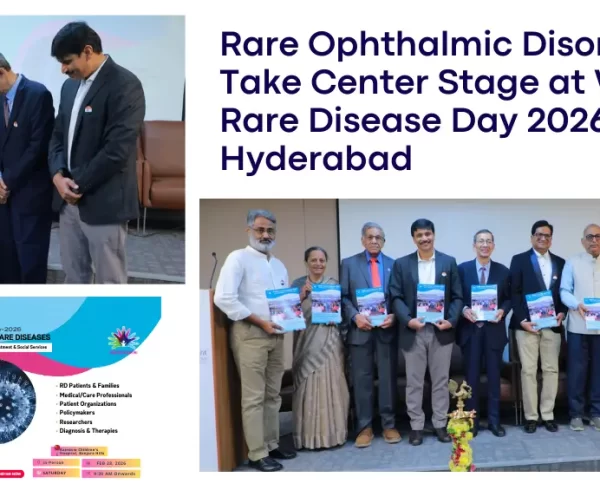
    • Inaugural session of World Rare Disease Day 2026 conference in Hyderabad, with experts from IORD, LVPEI, and Rainbow Children’s Hospital

      India: Rare Ophthalmic Disorders Take Centrestage at World Rare Disease Day-2026

      By IORD | 0 comment

      The event, attended by leading ophthalmologists, ocular geneticists, pediatric specialists, researchers, and patient advocates, spotlighted the urgent need for early diagnosis, stronger referral pathways, and expanded genetic and multidisciplinary services to address the growing burdenRead more

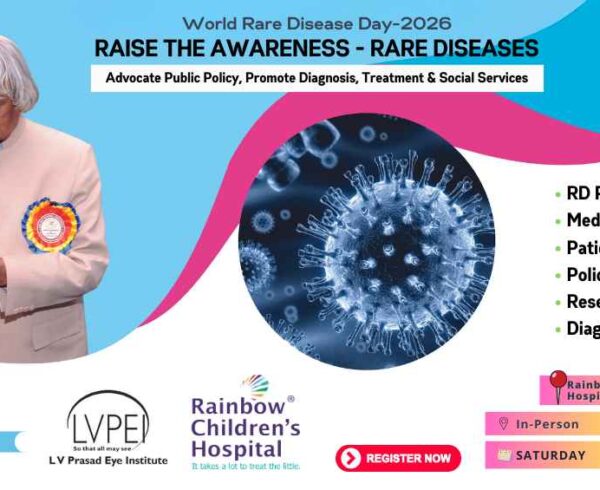
    • On World Rare Disease Day 2026, IORD, along with LV Prasad Eye Institute and Rainbow Children’s Hospital, is hosting a scientific conference in Hyderabad focused on Rare Ophthalmic Disorders

      IORD to Host World Rare Disease Day 2026 Conference Focused on Rare Ophthalmic Conditions

      By IORD | 0 comment

      Registration is now open. Limited seats available — register now using this link. Hyderabad, February 2026: The Indian Organisation for Rare Diseases (IORD), in collaboration with L V Prasad Eye Institute (LVPEI) and Rainbow Children’s Hospital,Read more

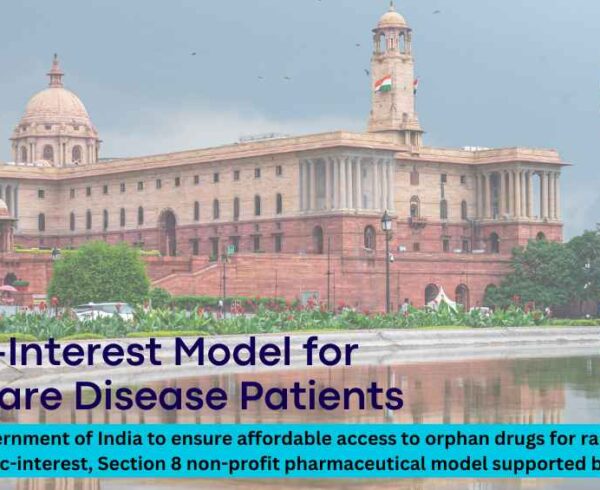
    • In this letter, IORD urges the Government of India to ensure affordable access to orphan drugs for rare disease patients through a public-interest, Section 8 non-profit pharmaceutical model supported by CSR funding.

      Bridging India’s Rare Disease Treatment Gap Through Public-Interest Pharmaceuticals

      By IORD | 0 comment

      IORD proposes a Section 8, CSR-supported public-interest pharmaceutical model to ensure affordable access to orphan drugs for millions of Indian patients.

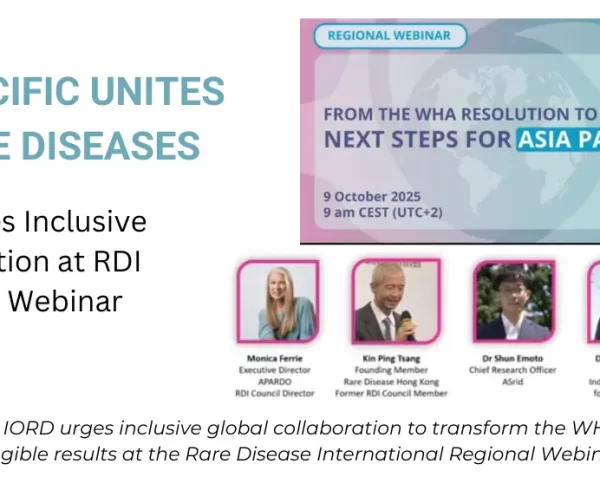
    • IORD leaders urge inclusive, global collaboration to turn the WHA Rare Disease Resolution into real action at the RDI Asia-Pacific Webinar on October 9.

      From Hope to Action: IORD Calls for Inclusive Global Action on Rare Diseases

      By IORD | 0 comment

      The RDI Regional Webinar on “From the WHA Resolution to Action: Next Steps for Asia Pacific” marked a pivotal moment for regional cooperation on rare diseases.   “Hope” — that was the word chosen byRead more

    • Delhi High Court clears Natco to launch Risdiplam generic version Natsmart, making SMA treatment affordable for thousands of Indian families.

      Natco Wins Patent Battle, Makes SMA Drug Affordable in India

      By IORD | 0 comment

      Delhi High Court clears Natco to launch Risdiplam generic version Natsmart, making SMA treatment affordable for thousands.

    NextPrevious

    Categories

    • ABN Andhra Jyothi
    • ANI
    • Deccan Chronicle
    • Economic Times
    • Eenadu
    • Events
    • IORD in News
    • IORD Updates
    • News
    • Pharmabiz.com
    • Prime9 News
    • Rare Disease News
    • Rare Disease Survivor
    • Sakshi
    • Telangana Today
    • The Hans India
    • The Hindu
    • The Pioneer
    • Times Now
    • Times of India
    • Uncategorised
    • Vaartha

    Recent Posts

    • India: Rare Ophthalmic Disorders Take Centrestage at World Rare Disease Day-2026
    • IORD to Host World Rare Disease Day 2026 Conference Focused on Rare Ophthalmic Conditions
    • Bridging India’s Rare Disease Treatment Gap Through Public-Interest Pharmaceuticals
    • India Steps Forward as a Global Leader in Rare Disease Management
    • From Hope to Action: IORD Calls for Inclusive Global Action on Rare Diseases

    Archives

    • March 2026
    • February 2026
    • January 2026
    • November 2025
    • October 2025
    • September 2025
    • August 2025
    • July 2025
    • June 2025
    • May 2025
    • April 2025
    • March 2025
    • February 2025
    • January 2025
    • December 2024
    • November 2024
    • September 2024
    • July 2024
    • June 2024
    • May 2024
    • March 2024
    • February 2024
    • December 2023
    • October 2023
    • July 2023
    • June 2023
    • May 2023
    • April 2023
    • March 2023
    • February 2023
    • January 2023
    • December 2022
    • November 2022
    • October 2022
    • September 2022
    • August 2022
    • June 2022
    • May 2022
    • April 2022
    • March 2022
    • February 2022
    • January 2022
    • December 2021
    • November 2021
    • October 2021
    • September 2021
    • August 2021
    • July 2021
    • May 2021
    • April 2021
    • November 2020
    • March 2020
    • February 2020
    • January 2020
    • February 2019
    • January 2018
    • September 2015

    IORD

    Indian Organization For Rare Diseases (IORD), a not-for-profit umbrella organization represents interests of all stakeholders of Rare Diseases in India including individual patients, patient support groups, health policy advocates and health care providers.

    RARE DISEASES

    • Rare Blood Diseases
    • Rare Heart Diseases
    • Rare Fungal Diseases
    • Rare Kidney Diseases
    • Rare Newborn Diseases
    • more...

    SERVICES

    • Research
    • Let's Come Together
    • Partner With Us
    • Volunteers
    • Privacy Policy
    • Sitemap

    CONTACT US

    Indian Organization For Rare Diseases
    Registered Office (India):
    Plot No. 397, Road No. 22B, Jubilee Hills, Hyderabad – 500033, Telangana, India.

    Phone: +91-9666438880

    Email: indiaord@gmail.com

    © 2020 Indian Organization For Rare Diseases | All Rights Reserved. Powered By Digital Dynamics
    • Home
    • About Us
      • Management Committee
      • Advisory Board
      • Newsletters
      • Newsletter Subscription
    • Rare Diseases
    • Research
    • Services
    • Donate
    • Gallery
      • Photo Gallery
        • World Rare Disease Day – 2023
        • World Rare Disease Day 2020
      • Video Gallery
        • World Rare Disease Day – 2020
        • World Rare Disease Day – 2019
        • World Rare Disease Day – 2018
    • Blog
    • Contact Us
    IORD – Indian Organization for Rare Diseases