+91-9666438880
indiaord@gmail.com
IORD – Indian Organization for Rare DiseasesIORD – Indian Organization for Rare DiseasesIORD – Indian Organization for Rare DiseasesIORD – Indian Organization for Rare Diseases
  • Home
  • About Us
    • Management Committee
    • Advisory Board
    • Newsletters
    • Newsletter Subscription
  • Rare Diseases
  • Research
  • Services
  • Donate
  • Gallery
    • Photo Gallery
      • World Rare Disease Day – 2023
      • World Rare Disease Day 2020
    • Video Gallery
      • World Rare Disease Day – 2020
      • World Rare Disease Day – 2019
      • World Rare Disease Day – 2018
  • Blog
  • Contact Us

How IORD Spurred Major Policy Shifts and Community Awareness

    Home IORD in News ABN Andhra Jyothi How IORD Spurred Major Policy Shifts and Community Awareness
    NextPrevious
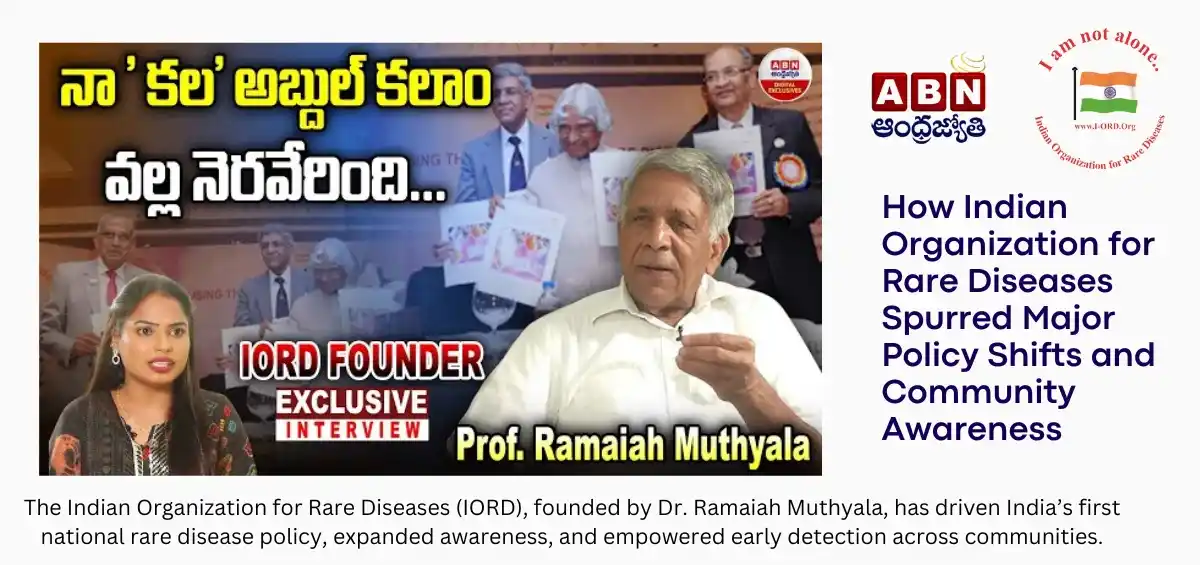
    In this interview with ABN Andhra Jyothi channel, Dr Ramaiah Muthyala highlights IORD’s journey, contribution, key milestones, advocacy roles, challenges and impact.

    How IORD Spurred Major Policy Shifts and Community Awareness

    By IORD | ABN Andhra Jyothi, IORD Updates, Rare Disease News | 0 comment | 7 August, 2025 | 0

    This is an abridged excerpt from an interview with Dr. Ramaiah Muthyala, Founder and CEO of the Indian Organization for Rare Diseases (IORD), given to senior journalist Kezia of ABN Andhra Jyothi news channel. You can watch the full interview here. 


    The Indian Organization for Rare Diseases (IORD), founded by Dr. Ramaiah Muthyala in 2005, has emerged as a driving force behind rare disease recognition, policy-making, and patient advocacy in India. Motivated by early experiences in his native village in Khammam district in Telangana and reinforced during his academic tenure in the United States, Dr. Muthyala established IORD — the country’s first non-profit dedicated to rare diseases — to address critical gaps in diagnosis, awareness, and equitable patient care. In this interview, Dr Ramaiah Muthyala highlights IORD’s journey, contribution, key milestones, advocacy roles, challenges and impact.


    Key Policy Milestones and Impact


    Dr Ramaiah Muthyala tells the interviewer how IORD played a pivotal role in shaping India’s first National Policy for Rare Diseases. In 2017, the Government of India’s Health Ministry adopted the country’s inaugural rare disease policy, drawing directly from the comprehensive IORD white paper — a document developed after comparative studies of international rare disease strategies.

    The late Dr. A.P.J. Abdul Kalam, former President of India, is recognised as a major catalyst for the rare disease movement. Dr. Kalam’s personal involvement turned rare disease policy into a national priority, with Dr. Muthyala crediting him as the driving force behind the “unfinished business” of rare disease advocacy.


    I say this with pride — Dr. Kalam’s official biographer once told me: “Dr. Kalam had six unfulfilled missions in his life — and one of them was Rare Diseases.” In 2015, Dr. Kalam came to Hyderabad to attend a conference on Rare Disease awareness. That moment was a milestone. From there, the government began to respond. The fact that the policy was announced — is truly a realisation of one of his dreams.


    IORD’s white paper presented detailed proposals for systematic screening, prevention, and care models. Today, between 7,000 and 10,000 rare diseases have been identified globally, with hundreds more discovered annually. Most lack formal names and clear diagnostic markers, with an average diagnosis delay of 7–10 years and frequent misdiagnoses stretching up to two decades.


    Addressing Genetic and Social Realities

    Most rare diseases have genetic origins, often surfacing in subsequent generations. Sickle cell disease, for example, remains prevalent in tribal communities and in populations where consanguineous marriages are common. Dr. Muthyala highlights historic public health successes, such as Prime Minister Narendra Modi’s campaign to combat sickle cell disease in Gujarat, which introduced systematic screening for school children and a color-coded card system based on genetic risk.

    Education and ongoing prevention are regarded as the primary strategies for containing genetic rare diseases, particularly in high-risk regions. “Prevention is always better than cure,” said Dr. Muthyala. “We are committed to promoting awareness and early detection wherever possible.”

    Advocacy, Research, and Ongoing Initiatives

    IORD’s mission centers on policy advocacy, awareness-building, and ensuring equal opportunities for all rare disease patients. Dr Ramaiah explains that IORD’s motto, “I am not alone,” serves to comfort families who often feel isolated by diagnoses. To strengthen early identification, IORD has implemented village-level pilot studies, particularly in Dr. Muthyala’s native Khammam district, training ASHA workers and local medical personnel to spot rare conditions more effectively than ever before.

    Rare Disease Day, observed annually on the last day of February, has become a key event in cities like Hyderabad, Vijayawada, Khammam, and Delhi, strengthening public engagement and government partnerships. The Telangana government and health leaders in Andhra Pradesh have already provided significant support for IORD initiatives, and a new Memorandum of Understanding with the Andhra government is under expert review.

    Barriers and Next Steps

    According to global estimates, around 90 million Indians — roughly 5% of the population — could be living with rare diseases. However, the exact national burden remains unknown, as rare conditions have yet to be systematically included in the decadal national census. IORD continues to urge the government to prioritize rare disease data collection.

    Access and affordability of rare disease drugs remain significant obstacles. While many previously patented orphan drugs are now locally manufactured in India, cost variations persist due to research expenses and supply chain factors. IORD advocates for expanded insurance coverage, the extension of PLI and related schemes, and mandatory newborn and prenatal screenings nationwide. “Newborn screening and prevention is central to our mission,” Dr. Muthyala emphasized, “but continued government and public engagement will determine our progress.”

    Efforts are also underway to formally integrate rare disease education into medical school curricula and ongoing professional training for nurses and doctors, amplifying the knowledge base and responsiveness of India’s healthcare system.

    Dr Ramaiah Muthyala, Dr. Abdul Kalam rare disease, healthcare advocacy India, Indian Organization for Rare Diseases, Indian rare disease awareness, newborn screening India, Orphan Drugs India, rare disease india, rare disease policy, sickle cell India

    IORD

    More posts by IORD

    Related Post

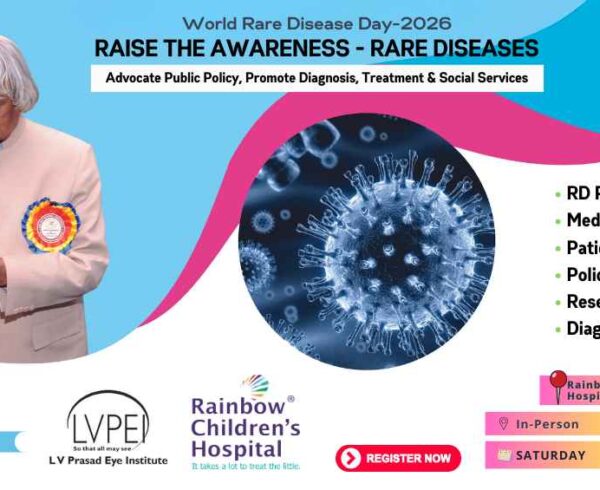
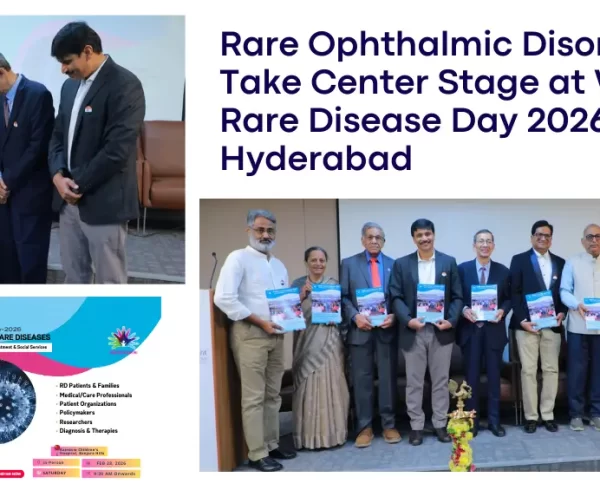
    • Inaugural session of World Rare Disease Day 2026 conference in Hyderabad, with experts from IORD, LVPEI, and Rainbow Children’s Hospital

      India: Rare Ophthalmic Disorders Take Centrestage at World Rare Disease Day-2026

      By IORD | 0 comment

      The event, attended by leading ophthalmologists, ocular geneticists, pediatric specialists, researchers, and patient advocates, spotlighted the urgent need for early diagnosis, stronger referral pathways, and expanded genetic and multidisciplinary services to address the growing burdenRead more

    • On World Rare Disease Day 2026, IORD, along with LV Prasad Eye Institute and Rainbow Children’s Hospital, is hosting a scientific conference in Hyderabad focused on Rare Ophthalmic Disorders

      IORD to Host World Rare Disease Day 2026 Conference Focused on Rare Ophthalmic Conditions

      By IORD | 0 comment

      Registration is now open. Limited seats available — register now using this link. Hyderabad, February 2026: The Indian Organisation for Rare Diseases (IORD), in collaboration with L V Prasad Eye Institute (LVPEI) and Rainbow Children’s Hospital,Read more

    • In this letter, IORD urges the Government of India to ensure affordable access to orphan drugs for rare disease patients through a public-interest, Section 8 non-profit pharmaceutical model supported by CSR funding.

      Bridging India’s Rare Disease Treatment Gap Through Public-Interest Pharmaceuticals

      By IORD | 0 comment

      IORD proposes a Section 8, CSR-supported public-interest pharmaceutical model to ensure affordable access to orphan drugs for millions of Indian patients.

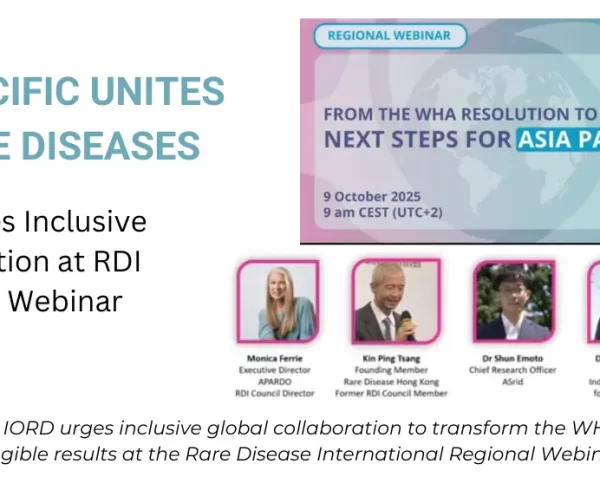
    • IORD leaders urge inclusive, global collaboration to turn the WHA Rare Disease Resolution into real action at the RDI Asia-Pacific Webinar on October 9.

      From Hope to Action: IORD Calls for Inclusive Global Action on Rare Diseases

      By IORD | 0 comment

      The RDI Regional Webinar on “From the WHA Resolution to Action: Next Steps for Asia Pacific” marked a pivotal moment for regional cooperation on rare diseases.   “Hope” — that was the word chosen byRead more

    • Delhi High Court clears Natco to launch Risdiplam generic version Natsmart, making SMA treatment affordable for thousands of Indian families.

      Natco Wins Patent Battle, Makes SMA Drug Affordable in India

      By IORD | 0 comment

      Delhi High Court clears Natco to launch Risdiplam generic version Natsmart, making SMA treatment affordable for thousands.

    Leave a Comment

    Cancel reply

    You must be logged in to post a comment.

    NextPrevious

    Categories

    • ABN Andhra Jyothi
    • ANI
    • Deccan Chronicle
    • Economic Times
    • Eenadu
    • Events
    • IORD in News
    • IORD Updates
    • News
    • Pharmabiz.com
    • Prime9 News
    • Rare Disease News
    • Rare Disease Survivor
    • Sakshi
    • Telangana Today
    • The Hans India
    • The Hindu
    • The Pioneer
    • Times Now
    • Times of India
    • Uncategorised
    • Vaartha

    Recent Posts

    • India: Rare Ophthalmic Disorders Take Centrestage at World Rare Disease Day-2026
    • IORD to Host World Rare Disease Day 2026 Conference Focused on Rare Ophthalmic Conditions
    • Bridging India’s Rare Disease Treatment Gap Through Public-Interest Pharmaceuticals
    • India Steps Forward as a Global Leader in Rare Disease Management
    • From Hope to Action: IORD Calls for Inclusive Global Action on Rare Diseases

    Archives

    • March 2026
    • February 2026
    • January 2026
    • November 2025
    • October 2025
    • September 2025
    • August 2025
    • July 2025
    • June 2025
    • May 2025
    • April 2025
    • March 2025
    • February 2025
    • January 2025
    • December 2024
    • November 2024
    • September 2024
    • July 2024
    • June 2024
    • May 2024
    • March 2024
    • February 2024
    • December 2023
    • October 2023
    • July 2023
    • June 2023
    • May 2023
    • April 2023
    • March 2023
    • February 2023
    • January 2023
    • December 2022
    • November 2022
    • October 2022
    • September 2022
    • August 2022
    • June 2022
    • May 2022
    • April 2022
    • March 2022
    • February 2022
    • January 2022
    • December 2021
    • November 2021
    • October 2021
    • September 2021
    • August 2021
    • July 2021
    • May 2021
    • April 2021
    • November 2020
    • March 2020
    • February 2020
    • January 2020
    • February 2019
    • January 2018
    • September 2015

    IORD

    Indian Organization For Rare Diseases (IORD), a not-for-profit umbrella organization represents interests of all stakeholders of Rare Diseases in India including individual patients, patient support groups, health policy advocates and health care providers.

    RARE DISEASES

    • Rare Blood Diseases
    • Rare Heart Diseases
    • Rare Fungal Diseases
    • Rare Kidney Diseases
    • Rare Newborn Diseases
    • more...

    SERVICES

    • Research
    • Let's Come Together
    • Partner With Us
    • Volunteers
    • Privacy Policy
    • Sitemap

    CONTACT US

    Indian Organization For Rare Diseases
    Registered Office (India):
    Plot No. 397, Road No. 22B, Jubilee Hills, Hyderabad – 500033, Telangana, India.

    Phone: +91-9666438880

    Email: indiaord@gmail.com

    © 2020 Indian Organization For Rare Diseases | All Rights Reserved. Powered By Digital Dynamics
    • Home
    • About Us
      • Management Committee
      • Advisory Board
      • Newsletters
      • Newsletter Subscription
    • Rare Diseases
    • Research
    • Services
    • Donate
    • Gallery
      • Photo Gallery
        • World Rare Disease Day – 2023
        • World Rare Disease Day 2020
      • Video Gallery
        • World Rare Disease Day – 2020
        • World Rare Disease Day – 2019
        • World Rare Disease Day – 2018
    • Blog
    • Contact Us
    IORD – Indian Organization for Rare Diseases