+91-9666438880
indiaord@gmail.com
IORD – Indian Organization for Rare DiseasesIORD – Indian Organization for Rare DiseasesIORD – Indian Organization for Rare DiseasesIORD – Indian Organization for Rare Diseases
  • Home
  • About Us
    • Management Committee
    • Advisory Board
    • Newsletters
    • Newsletter Subscription
  • Rare Diseases
  • Research
  • Services
  • Donate
  • Gallery
    • Photo Gallery
      • World Rare Disease Day – 2023
      • World Rare Disease Day 2020
    • Video Gallery
      • World Rare Disease Day – 2020
      • World Rare Disease Day – 2019
      • World Rare Disease Day – 2018
  • Blog
  • Contact Us

Muscular Dystrophy Complexities: Insights from Experts and Parent Advocacy Group

    Home IORD Updates Muscular Dystrophy Complexities: Insights from Experts and Parent Advocacy Group
    NextPrevious
    The following is an excerpt from a panel discussion on Muscular Dystrophy by medical experts and members of BharathMD Foundation, a Parent Advocacy Organization of Muscular Dystrophy. The insights shared during this discussion highlight the importance of awareness, early diagnosis, and access to resources for families navigating the challenges of Muscular Dystrophy.

    Muscular Dystrophy Complexities: Insights from Experts and Parent Advocacy Group

    By IORD | IORD Updates, Rare Disease News | 0 comment | 19 September, 2024 | 0

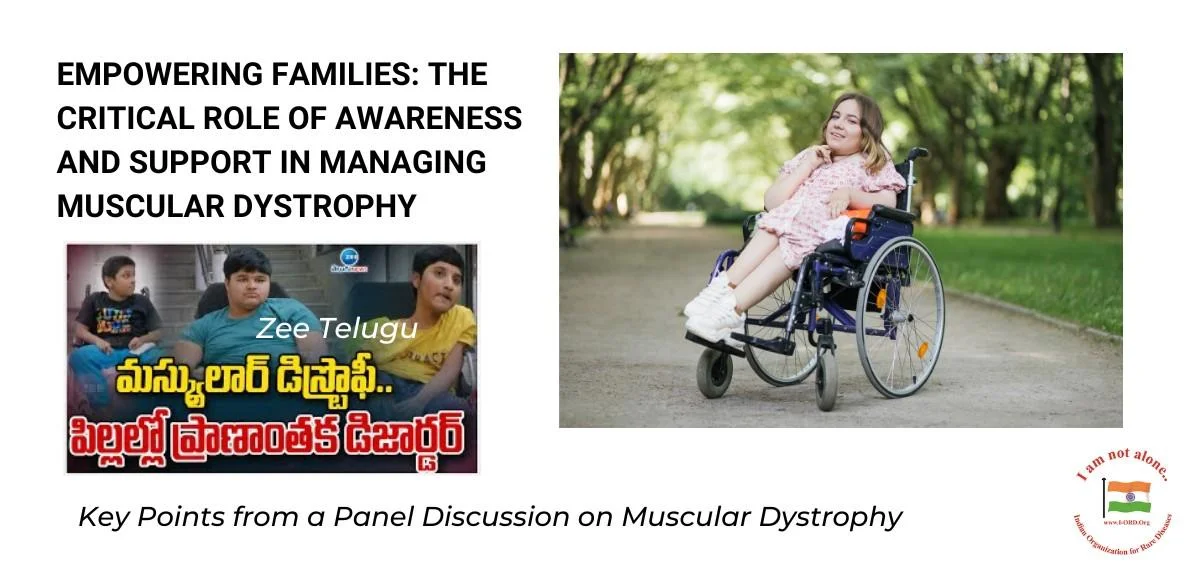
    The following is an excerpt from a panel discussion on Zee Telugu on Muscular Dystrophy featuring medical experts and members of the BharathMD Foundation, a parent advocacy organization for Muscular Dystrophy. The insights shared during this discussion highlight the importance of awareness, early diagnosis, and access to resources for families navigating the challenges of Muscular Dystrophy.


    Muscular Dystrophy is estimated to affect approximately 1 in 3,000 children, leading to progressive muscle degeneration that can severely impact mobility and quality of life.

    Pediatric neurologist Dr. Sireesha Yareeda from NIMS Hospital elaborated on the condition, noting that most children with Muscular Dystrophy are born without any apparent issues. However, as they grow, many begin to experience significant mobility challenges, such as difficulty climbing stairs or running. This gradual decline in physical abilities is a hallmark of the disease and can be distressing for both children and their families.

    Dr. Yareeda emphasized the diversity within the condition, mentioning that there are around 40 different types of muscular dystrophies, each with its own specific characteristics and progression patterns. For families concerned about the possibility of Muscular Dystrophy, early diagnosis is crucial. The condition can be effectively diagnosed through a genetic test, which is accessible at a cost of approximately Rs 3,500. Before proceeding with genetic testing, a CPK (creatine phosphokinase) test is often conducted. If the CPK levels are significantly elevated, this may warrant further investigation through genetic testing to confirm the diagnosis of Muscular Dystrophy.

    Problems Faced by Parents

    Parents of children with Muscular Dystrophy often find themselves navigating a complex emotional and physical landscape. During the panel discussion, many emphasized the critical need for awareness and support, highlighting the profound challenges that come with raising a child diagnosed with this condition. The slow and relentless degeneration of muscles can lead to significant changes in a child’s mobility, often resulting in the use of a wheelchair as they grow older. This transition not only impacts the child but also places an immense burden on the family, making daily activities increasingly exhausting.

    Support Needs for Children with Muscular Dystrophy

    While children with Muscular Dystrophy are often recognized for their high intelligence and cognitive abilities, the progressive nature of the disease creates a profound dependency on a wide array of medical specialists. As the condition affects various bodily functions and systems, these children require multidisciplinary support that spans multiple fields, including pediatrics, neurology, cardiology, pulmonology, and endocrinology. Each of these specialties plays a crucial role in addressing the diverse health challenges that arise as the disease progresses.

    Mr. Murali, co-founder of the Bharat MD Foundation, articulated the primary goal of their parent-led support group: to create a unified platform for caregivers and stakeholders involved in the care of children with Muscular Dystrophy. This collaborative approach aims to bridge gaps in communication and resources, ensuring that families can access comprehensive care tailored to their child’s unique needs. By bringing together experts from various medical disciplines, the foundation fosters a holistic understanding of the condition and encourages a more coordinated approach to treatment.

    The establishment of this support group is vital, as it not only provides families with essential information and resources but also creates a sense of community among those who share similar experiences. Parents can share their challenges and successes, learn from one another, and advocate for improved healthcare services. Ultimately, the Bharat MD Foundation seeks to empower families, enhance the quality of care for children with Muscular Dystrophy, and raise awareness about the importance of comprehensive support in managing this complex condition.

    Care for Muscular Dystrophy

    During the panel discussion, Dr. Santosh Kumar, a member of the National Medical Commission, shed light on the significant challenges faced by children with Muscular Dystrophy in accessing essential government support. He noted that many families experience frustrating delays in obtaining disability scholarships and pensions, which are crucial for managing the financial burdens associated with the condition. Particularly in Telangana, these delays are more pronounced compared to Andhra Pradesh, highlighting the inconsistencies in support across different states. Dr. Kumar emphasized the need for a streamlined process to ensure that children receive timely assistance, advocating for hassle-free rehabilitation care tailored to their unique needs.

    In addition to addressing bureaucratic challenges, Dr. Kumar proposed the establishment of a Centre of Excellence for Duchenne Muscular Dystrophy (DMD) in Hyderabad. This center would serve as a dedicated facility for comprehensive care, research, and education, ultimately improving outcomes for children with Muscular Dystrophy. By centralizing resources and expertise, such a center could facilitate better diagnosis, treatment, and ongoing support for affected families.

    Echoing these sentiments, BharatMD Foundation co-founder Mr. Murali called for the availability of generic versions of US FDA-approved gene therapies in India. The high cost of these therapies often puts them out of reach for many families, leaving them with limited options for treatment. By advocating for more accessible medications, Mr. Murali aims to ensure that children with Muscular Dystrophy can benefit from the latest advancements in medical science.

    Pediatric neurologist Dr. Sheerisha added to the conversation by discussing the current treatment protocols, which primarily involve the use of steroids. While these medications are prescribed to manage symptoms and slow disease progression, they often come with a range of side effects that can impact the child’s overall well-being. Dr. Sheerisha expressed optimism about the future, noting that several advanced drugs are in development that could offer more effective treatment options with fewer adverse effects. This prospect of innovative therapies raises hope for improved care and quality of life for children living with Muscular Dystrophy.

    Indian Organisation for Rare Diseases (IORD), muscular dystrophy, Muscular Dystrophy Parent Advocacy, Muscular Dystrophy Patients' Organisation, Rare Disease NGOs in India, Rare genetic diseases

    IORD

    More posts by IORD

    Related Post

    • Inaugural session of World Rare Disease Day 2026 conference in Hyderabad, with experts from IORD, LVPEI, and Rainbow Children’s Hospital

      India: Rare Ophthalmic Disorders Take Centrestage at World Rare Disease Day-2026

      By IORD | 0 comment

      The event, attended by leading ophthalmologists, ocular geneticists, pediatric specialists, researchers, and patient advocates, spotlighted the urgent need for early diagnosis, stronger referral pathways, and expanded genetic and multidisciplinary services to address the growing burdenRead more

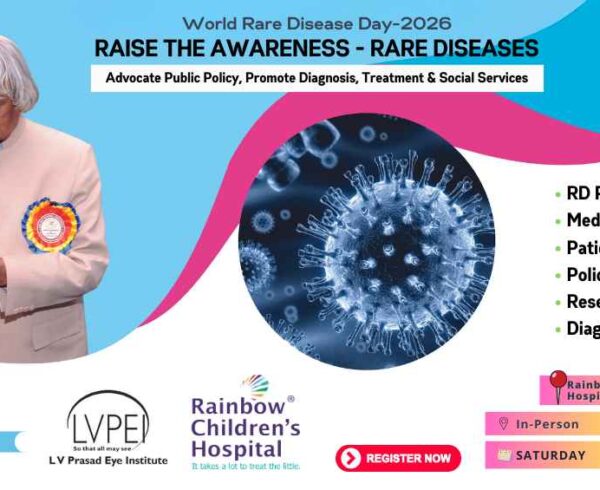
    • On World Rare Disease Day 2026, IORD, along with LV Prasad Eye Institute and Rainbow Children’s Hospital, is hosting a scientific conference in Hyderabad focused on Rare Ophthalmic Disorders

      IORD to Host World Rare Disease Day 2026 Conference Focused on Rare Ophthalmic Conditions

      By IORD | 0 comment

      Registration is now open. Limited seats available — register now using this link. Hyderabad, February 2026: The Indian Organisation for Rare Diseases (IORD), in collaboration with L V Prasad Eye Institute (LVPEI) and Rainbow Children’s Hospital,Read more

    • In this letter, IORD urges the Government of India to ensure affordable access to orphan drugs for rare disease patients through a public-interest, Section 8 non-profit pharmaceutical model supported by CSR funding.

      Bridging India’s Rare Disease Treatment Gap Through Public-Interest Pharmaceuticals

      By IORD | 0 comment

      IORD proposes a Section 8, CSR-supported public-interest pharmaceutical model to ensure affordable access to orphan drugs for millions of Indian patients.

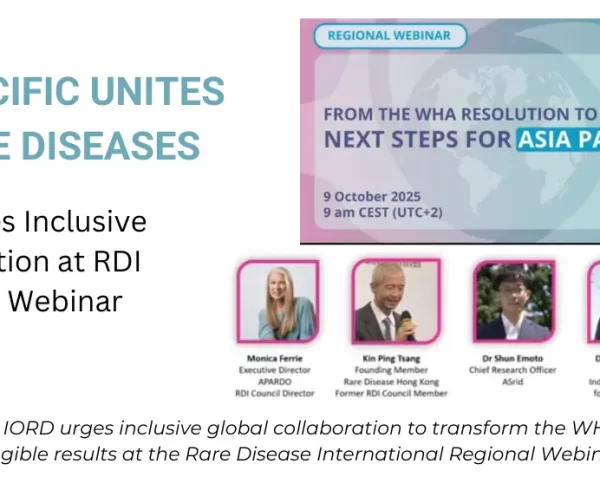
    • IORD leaders urge inclusive, global collaboration to turn the WHA Rare Disease Resolution into real action at the RDI Asia-Pacific Webinar on October 9.

      From Hope to Action: IORD Calls for Inclusive Global Action on Rare Diseases

      By IORD | 0 comment

      The RDI Regional Webinar on “From the WHA Resolution to Action: Next Steps for Asia Pacific” marked a pivotal moment for regional cooperation on rare diseases.   “Hope” — that was the word chosen byRead more

    • Delhi High Court clears Natco to launch Risdiplam generic version Natsmart, making SMA treatment affordable for thousands of Indian families.

      Natco Wins Patent Battle, Makes SMA Drug Affordable in India

      By IORD | 0 comment

      Delhi High Court clears Natco to launch Risdiplam generic version Natsmart, making SMA treatment affordable for thousands.

    NextPrevious

    Categories

    • ABN Andhra Jyothi
    • ANI
    • Deccan Chronicle
    • Economic Times
    • Eenadu
    • Events
    • IORD in News
    • IORD Updates
    • News
    • Pharmabiz.com
    • Prime9 News
    • Rare Disease News
    • Rare Disease Survivor
    • Sakshi
    • Telangana Today
    • The Hans India
    • The Hindu
    • The Pioneer
    • Times Now
    • Times of India
    • Uncategorised
    • Vaartha

    Recent Posts

    • India: Rare Ophthalmic Disorders Take Centrestage at World Rare Disease Day-2026
    • IORD to Host World Rare Disease Day 2026 Conference Focused on Rare Ophthalmic Conditions
    • Bridging India’s Rare Disease Treatment Gap Through Public-Interest Pharmaceuticals
    • India Steps Forward as a Global Leader in Rare Disease Management
    • From Hope to Action: IORD Calls for Inclusive Global Action on Rare Diseases

    Archives

    • March 2026
    • February 2026
    • January 2026
    • November 2025
    • October 2025
    • September 2025
    • August 2025
    • July 2025
    • June 2025
    • May 2025
    • April 2025
    • March 2025
    • February 2025
    • January 2025
    • December 2024
    • November 2024
    • September 2024
    • July 2024
    • June 2024
    • May 2024
    • March 2024
    • February 2024
    • December 2023
    • October 2023
    • July 2023
    • June 2023
    • May 2023
    • April 2023
    • March 2023
    • February 2023
    • January 2023
    • December 2022
    • November 2022
    • October 2022
    • September 2022
    • August 2022
    • June 2022
    • May 2022
    • April 2022
    • March 2022
    • February 2022
    • January 2022
    • December 2021
    • November 2021
    • October 2021
    • September 2021
    • August 2021
    • July 2021
    • May 2021
    • April 2021
    • November 2020
    • March 2020
    • February 2020
    • January 2020
    • February 2019
    • January 2018
    • September 2015

    IORD

    Indian Organization For Rare Diseases (IORD), a not-for-profit umbrella organization represents interests of all stakeholders of Rare Diseases in India including individual patients, patient support groups, health policy advocates and health care providers.

    RARE DISEASES

    • Rare Blood Diseases
    • Rare Heart Diseases
    • Rare Fungal Diseases
    • Rare Kidney Diseases
    • Rare Newborn Diseases
    • more...

    SERVICES

    • Research
    • Let's Come Together
    • Partner With Us
    • Volunteers
    • Privacy Policy
    • Sitemap

    CONTACT US

    Indian Organization For Rare Diseases
    Registered Office (India):
    Plot No. 397, Road No. 22B, Jubilee Hills, Hyderabad – 500033, Telangana, India.

    Phone: +91-9666438880

    Email: indiaord@gmail.com

    © 2020 Indian Organization For Rare Diseases | All Rights Reserved. Powered By Digital Dynamics
    • Home
    • About Us
      • Management Committee
      • Advisory Board
      • Newsletters
      • Newsletter Subscription
    • Rare Diseases
    • Research
    • Services
    • Donate
    • Gallery
      • Photo Gallery
        • World Rare Disease Day – 2023
        • World Rare Disease Day 2020
      • Video Gallery
        • World Rare Disease Day – 2020
        • World Rare Disease Day – 2019
        • World Rare Disease Day – 2018
    • Blog
    • Contact Us
    IORD – Indian Organization for Rare Diseases